

A French drain is a trench lined with filter fabric, filled with clean gravel, with a perforated pipe running along the bottom. Groundwater soaking through your yard reaches the trench, drops through the stone into the pipe, and flows downhill to somewhere it can safely come out. It is the most common fix for a yard that stays soggy days after the rain, and for water that keeps finding its way to a foundation.
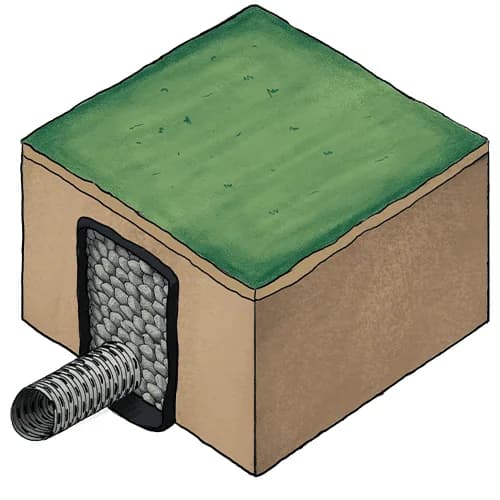
How a French drain works
Water always takes the easiest path. Packed clay and topsoil are a hard path; loose gravel and an open pipe are an easy one. A French drain gives the water an easier route than the one it was taking toward your basement or your lowest corner of lawn.
- Water reaches the trench. Groundwater moving sideways through the soil, or water soaking down from the surface, meets the stone.
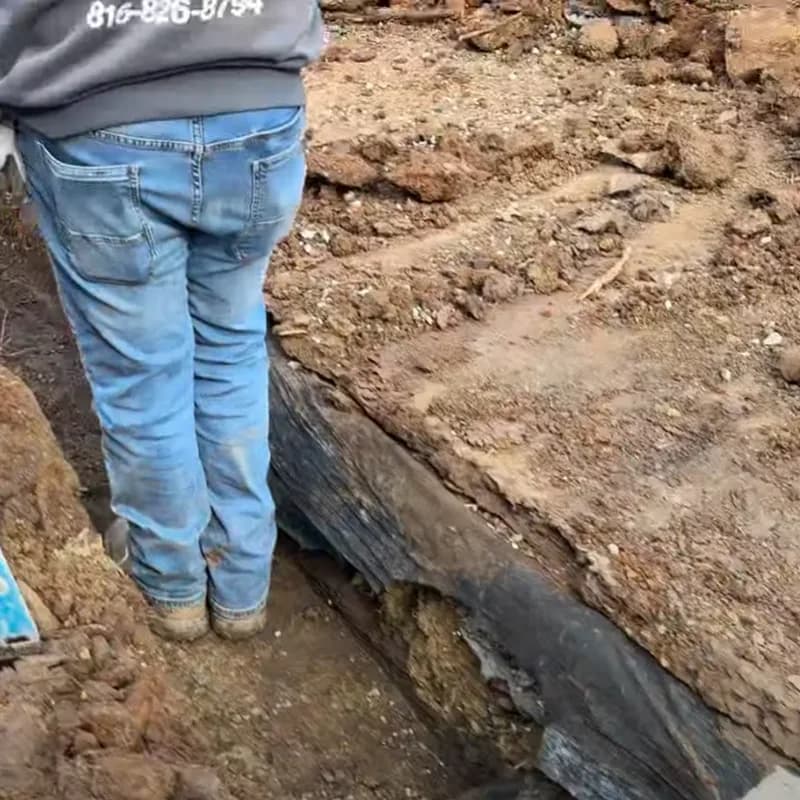
- The fabric lets water in and keeps dirt out. Filter fabric wraps the stone on every side. Without it, silt washes into the gaps and the drain slowly turns into a buried line of mud.
- The pipe carries it away. The perforated pipe at the bottom of the trench is laid at a steady fall of at least 1%, so collected water keeps moving instead of sitting.
- It comes out somewhere lower. A pop-up emitter, a daylight outlet, the street, a dry well, or an outdoor sump pump if there is no fall at all.
How we build one
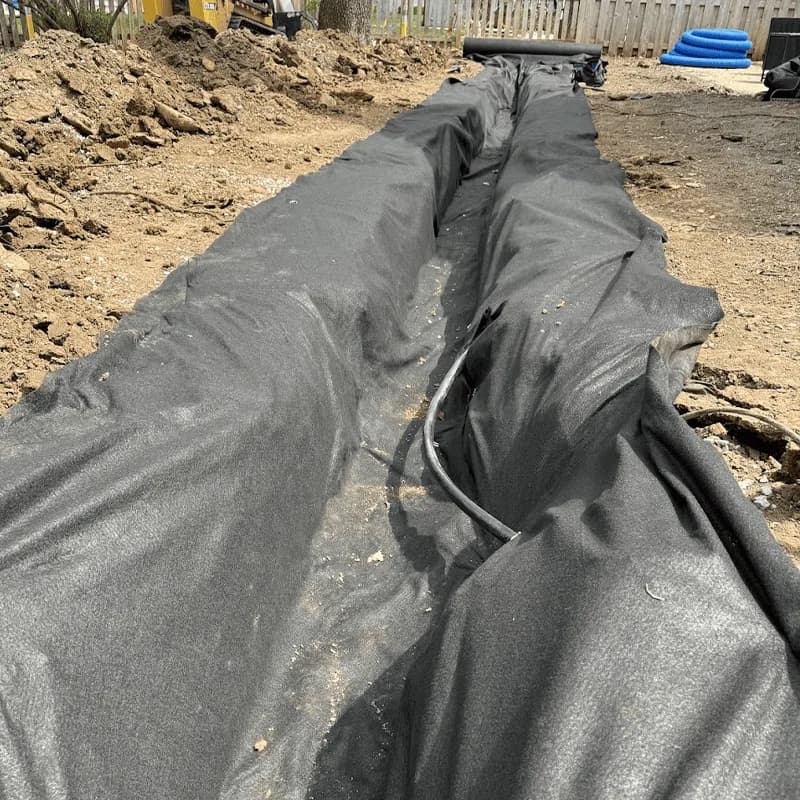
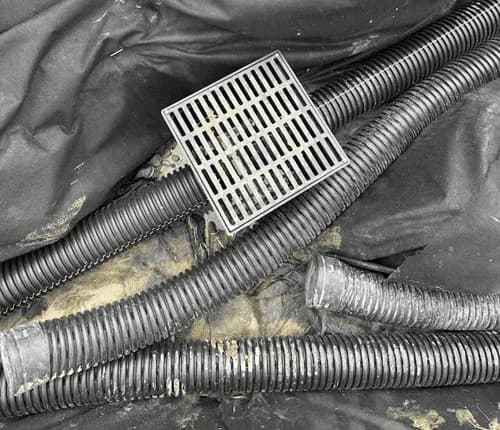
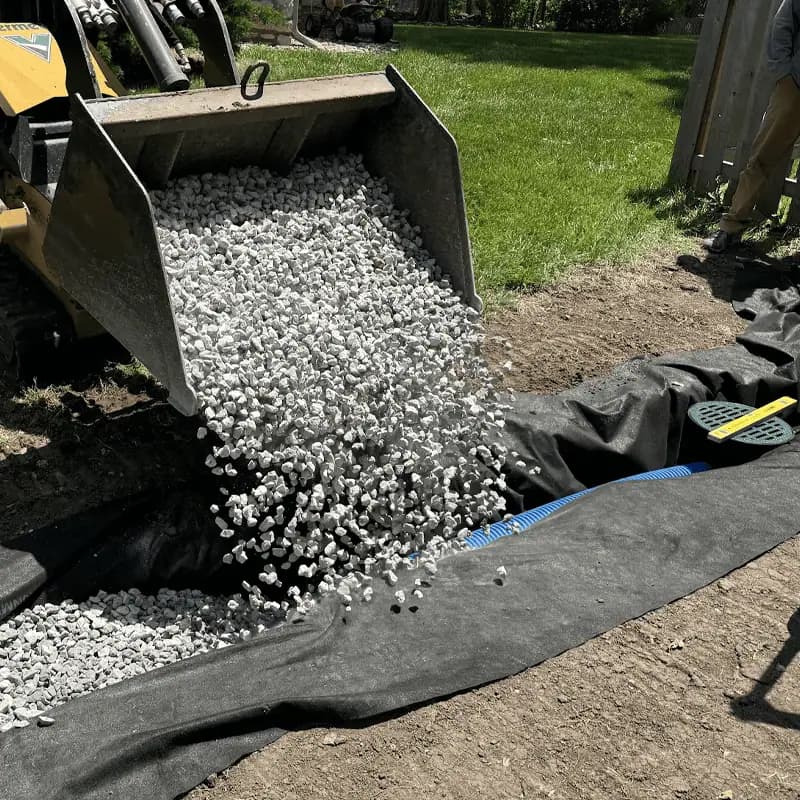
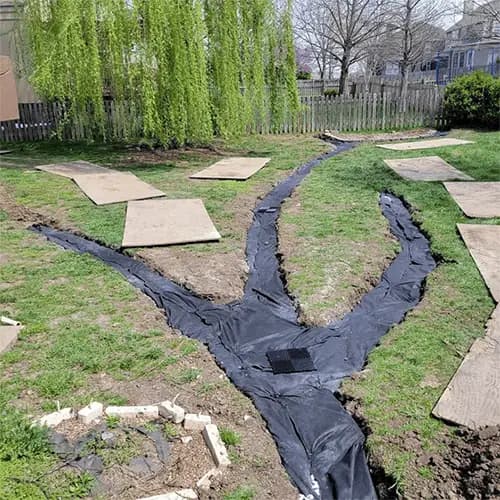
Open or closed?
A closed French drain is covered with soil and sod, so you never see it. An open French drain leaves the gravel exposed at the surface, which lets it catch surface water directly as well as groundwater. Open drains work well along driveways and in rock beds; closed drains are what most people want through the middle of a lawn.
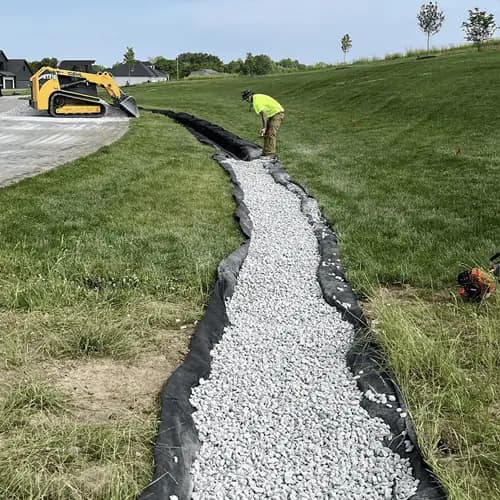
When you need a French drain, and when you need something else
A French drain is the right tool for groundwater: water moving through the soil. It is often the wrong tool for water that arrives on the surface all at once.
| The problem | Usually the right fix |
|---|---|
| A strip of lawn that stays soggy for days after rain | A French drain across or along the wet area. See soggy yard solutions. |
| Water seeping toward the foundation from uphill | A French drain or a curtain drain intercepting it. |
| A puddle that forms in the same low spot every storm | A catch basin. See catch basin vs French drain. |
| Water pouring out of downspouts next to the house | Buried downspouts in solid pipe. |
| Water running toward the house across the surface | Regrading or a swale. |
Most of the yards we fix need two or three of these working together. That is normal, and it is why we look at the whole yard before recommending anything.
Why French drains fail
Almost every failed French drain we dig up failed for a reason that was decided on the day it went in: no fabric, too shallow, the wrong pipe, no real slope, or nowhere for the water to go. We cover them one by one in 11 French drain mistakes we are hired to repair.
Frequently Asked Questions
How deep should a French drain be?
In most residential yards, 12 to 18 inches deep. That is deep enough to catch groundwater moving through the topsoil and shallow enough to stay above the water table. Drains protecting a foundation or a basement wall can go deeper. The Kansas City frost line is about 3 feet, but moving water freezes at a lower temperature, so a yard drain does not need to reach it.
Why is it called a French drain?
Not because of France. It is named after Henry French, a Massachusetts farmer and judge who wrote about this kind of drain in the 1850s.
How long does a French drain last?
A well-built one can run for decades. The ones that fail early nearly always fail for the same reasons: no filter fabric, so silt fills the stone; too little slope, so water sits in the pipe; or cheap pipe that crushes. All three are decided on installation day.
Does a French drain need an outlet?
Yes. It moves water, it does not make it disappear. The water has to come out somewhere lower: a pop-up emitter, a daylight outlet on a slope, the street, a dry well, or an outdoor sump pump that lifts it out when there is no fall at all.
Can I put my downspouts into a French drain?
We do not. A downspout dumps a lot of water at once, and pushing it into perforated pipe sends roof water out into the soil right where you were trying to dry it out. Downspouts get their own solid pipe, often in the same trench, laid alongside the French drain pipe.
How much does a French drain cost?
Professional installs in Kansas City commonly run $4,000 to $12,000, depending on length, depth, how the water discharges and what is in the way. Our French drain cost calculator walks through the numbers.
Not sure what your yard needs?
Try the French drain cost calculator, read about our French drain installation, or have us look at it in person. Estimates are free. Book a free estimate or call (816) 826-8794.