

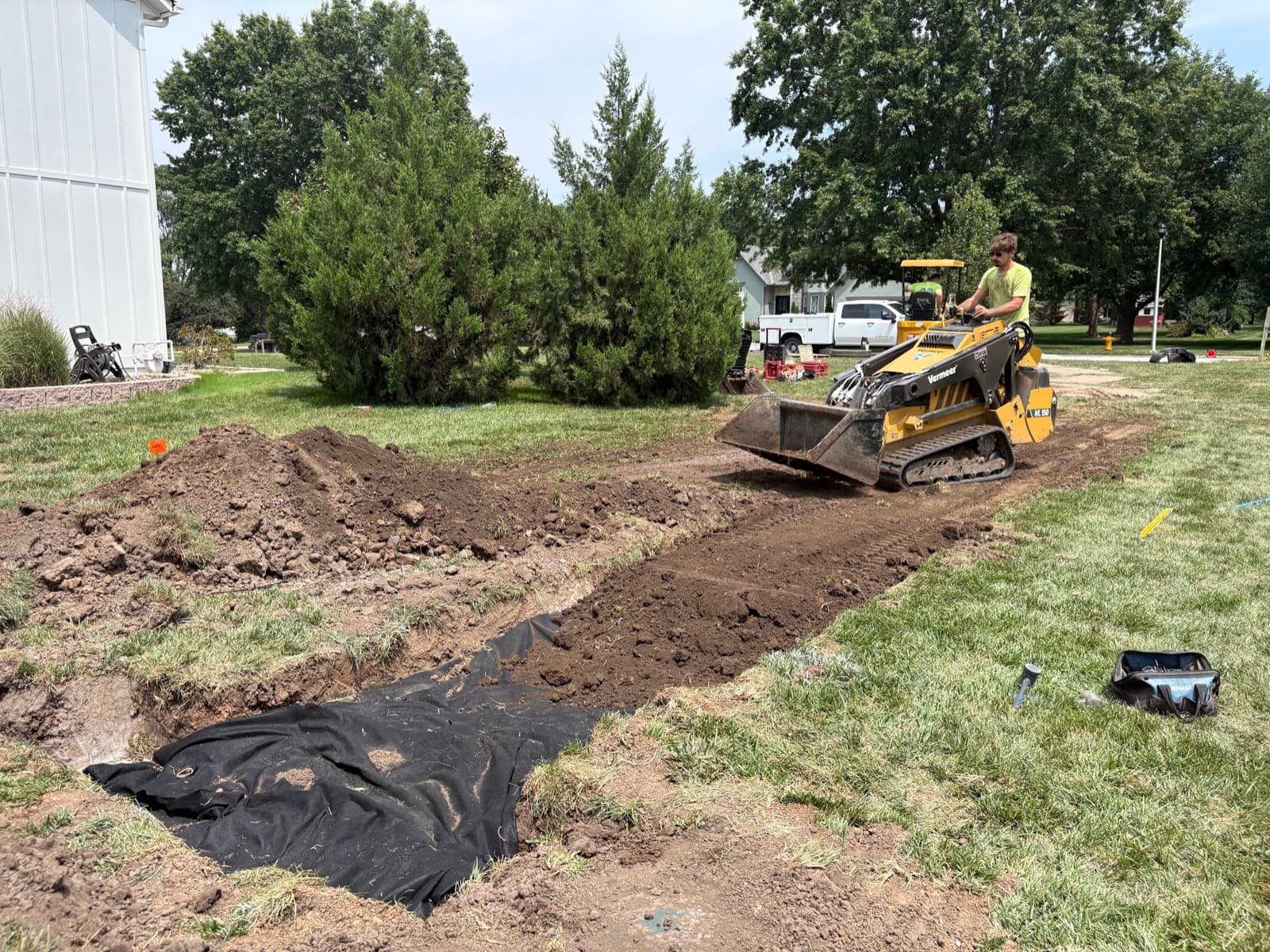
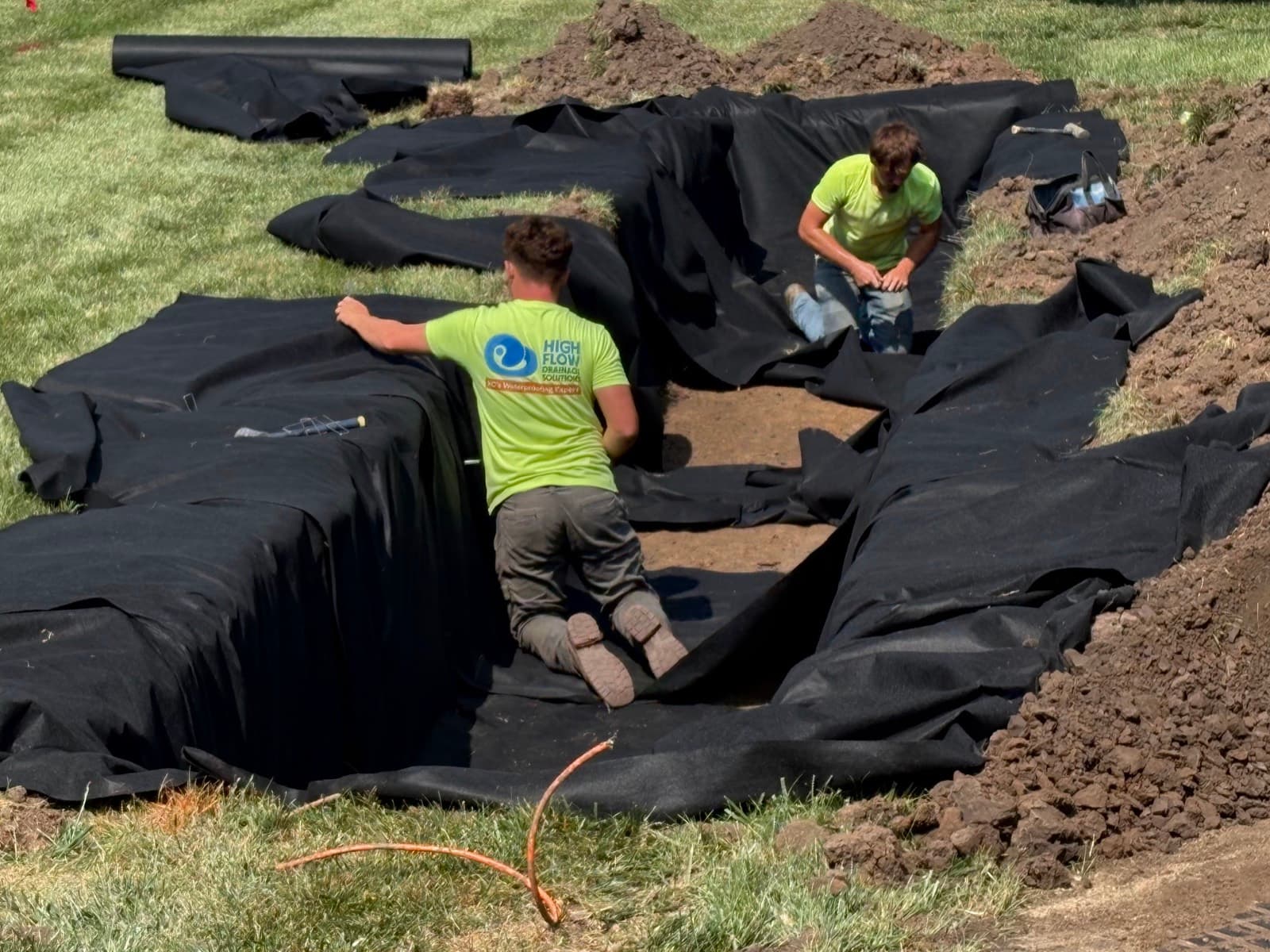
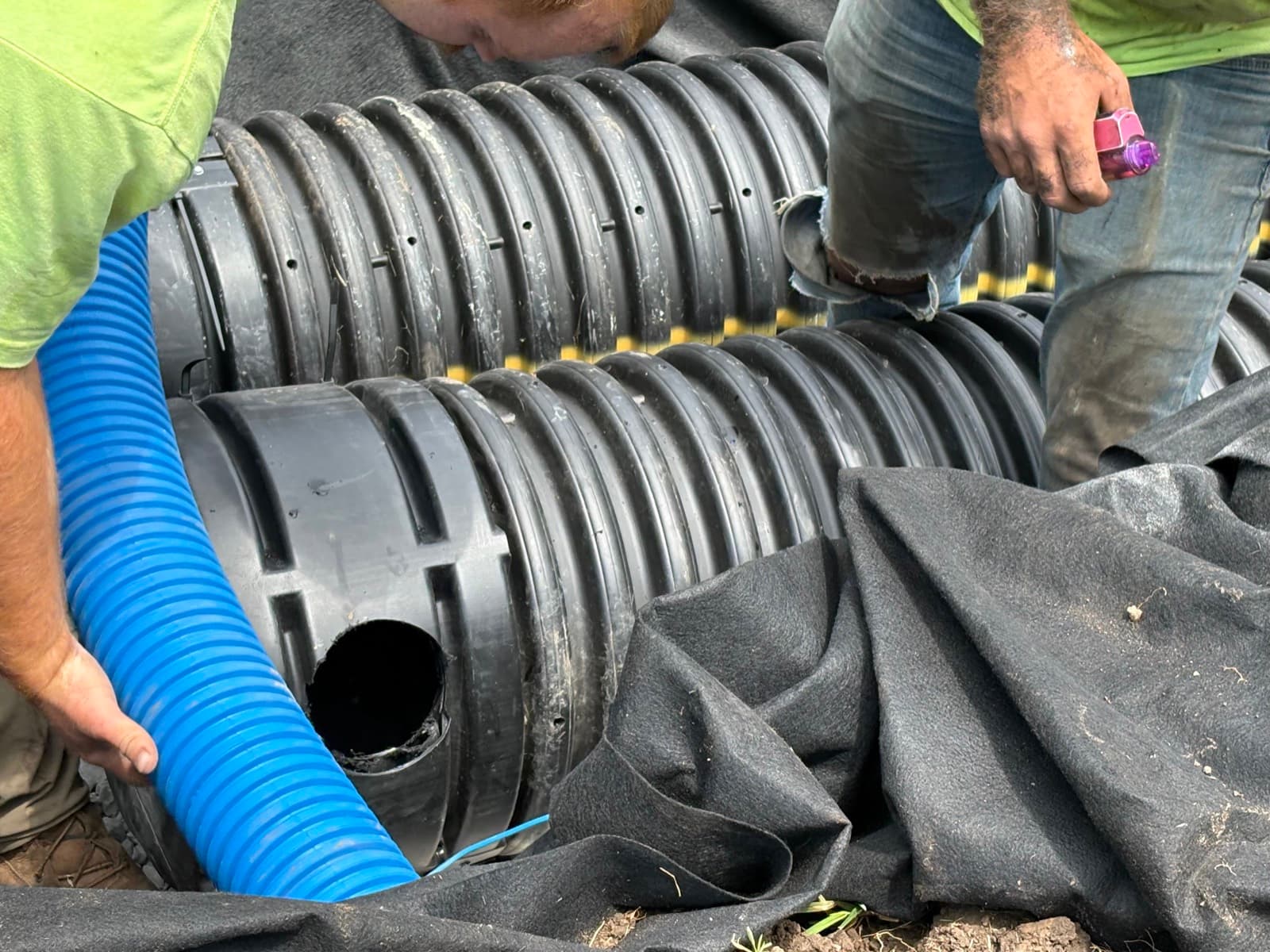
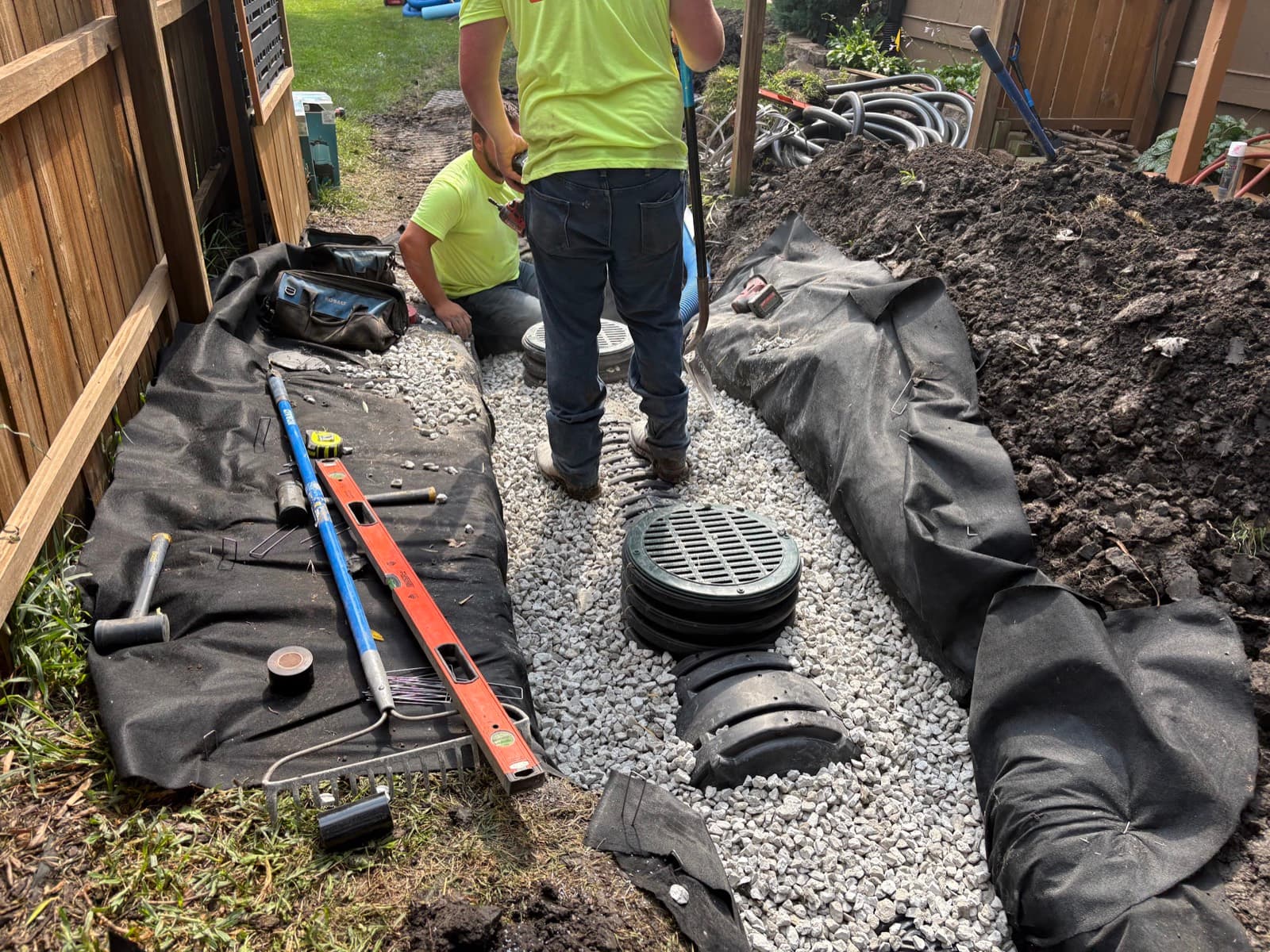
A dry well is a buried, fabric-wrapped void full of washed stone that takes water your yard cannot get rid of on the surface (a sump pump discharge line, roof water, the runoff that keeps pooling in the same low corner) and gives it somewhere to go underground. A leach bed is the same thing built shallow and wide instead of deep and narrow. Which one your lot needs comes down to your soil and the room you have, and that is a decision we make standing in the yard, not from an office.
Looking for a septic leach field? This is not that. Everything here is stormwater: roof, sump and surface water. We do not install, repair or inspect septic systems, and a failing septic drainfield needs a licensed septic contractor instead. We would rather tell you now than take the call.
Where the water goes: nowhere. That is the point.
This is the part people get wrong, and it is worth being blunt about. A dry well is the end of the line, not a stop along it. There is no outlet pipe. Nothing pops up in the lawn further down. Nothing daylights into the ditch at the back of the property. Water arrives, sits in the gaps between the stone, and leaves the only way it can: soaking outward and downward into the soil around the pit.
Everything else follows from that. Nothing pumps the water out. Nothing filters it onward. The one thing making the system work is your soil’s willingness to accept water, which is why the honest version of this service begins by measuring that rather than by quoting a size.
What we usually connect to one
The most common feed by a wide margin is a sump pump discharge line. A sump has to put its water somewhere, and on a lot with no fall and no storm connection there is often nowhere on the surface to put it that is not either the neighbour’s yard or a spot that drains straight back to your own footing. A dry well gives that pump a destination.
- Sump pump discharge. Sized for the pump’s real output, not for roof area, and set far enough from the house that the water cannot track back to the foundation and get pumped round again.
- Buried downspout lines. Roof water, where there is no fall to carry it anywhere better.
- Catch basins and yard drains. Surface water collected from a low spot and taken underground.
How we build one
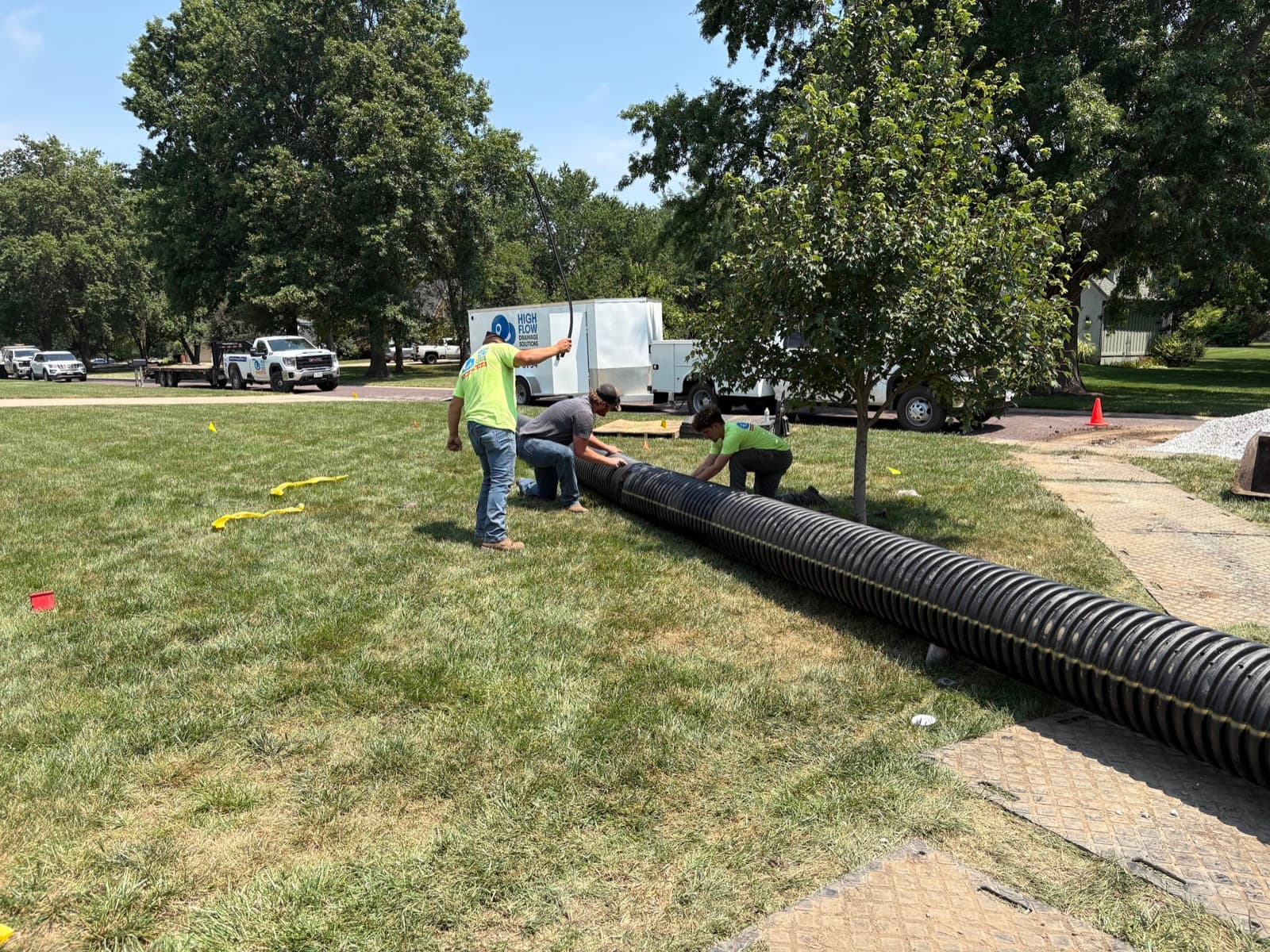
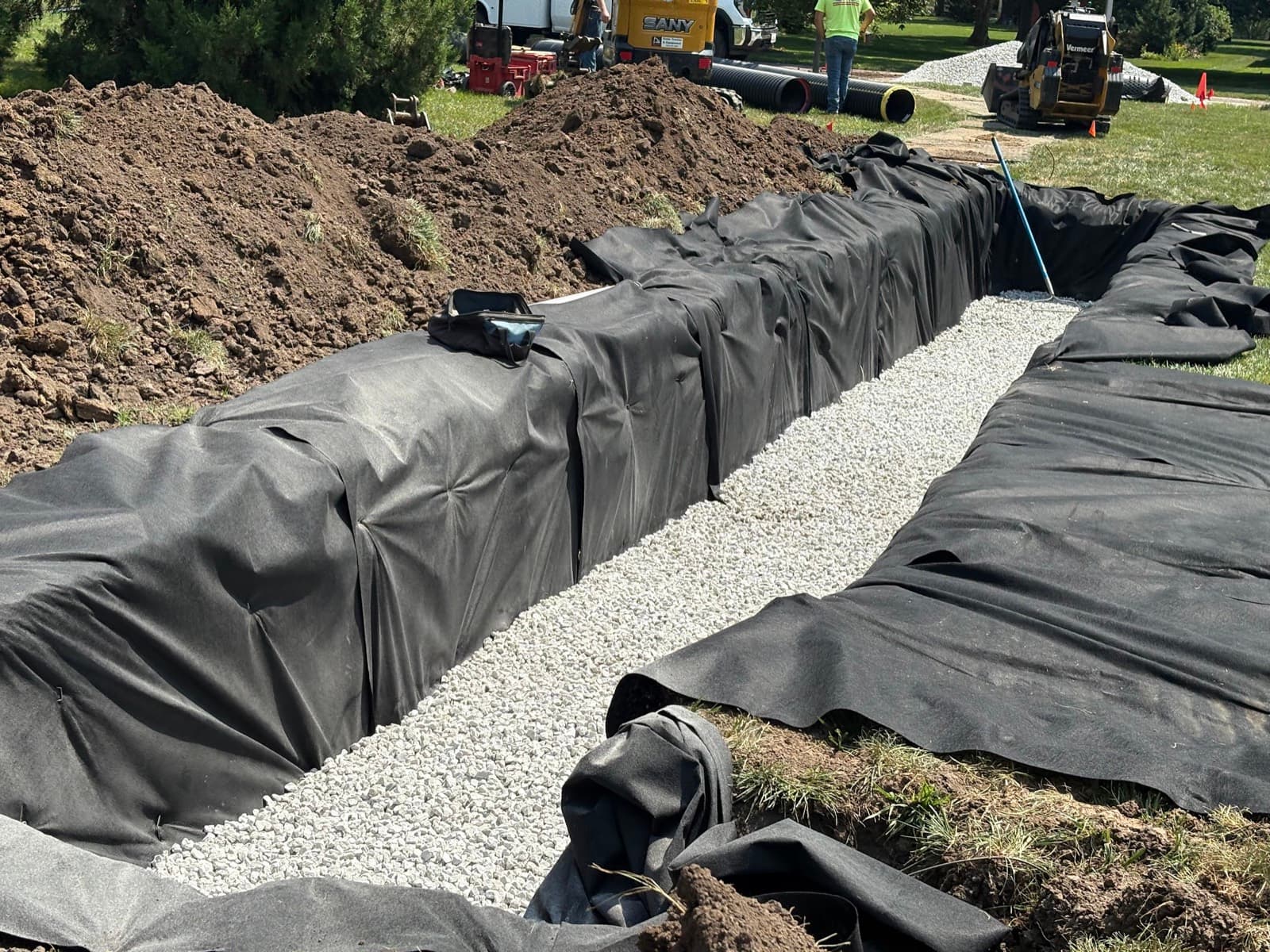
Dry well vs French drain vs pop-up emitter
These three get talked about as if they were interchangeable. They are not, and the cleanest way to tell them apart is to ask what each one does with the water. Only one of them ends the journey.
| Solution | What it does with the water | Best when |
|---|---|---|
| Dry well / leach bed | Ends it. Water soaks away into the surrounding soil. No outlet. | Soil will absorb it and there is nowhere downhill to send it. The usual answer for a sump discharge on a flat lot. |
| French drain | Collects it along a trench and carries it somewhere else. | You need to intercept water across a run, and you have somewhere for it to go. |
| Pop-up emitter | Returns it to the surface at the end of a buried line. | There is enough fall to daylight the line well away from the house. |
A dry well never feeds a pop-up emitter, and an emitter is not the “end” of a dry well. They are two different answers to the same question. If your lot has fall, moving the water is usually cheaper. If it does not, a dry well may be the only place the water can go.
Frequently Asked Questions
Where does the water in a dry well go?
Nowhere else. That is the point of it. A dry well is the end of the line, not a stop along the way. There is no outlet pipe and nothing daylighting at the far end. Water arrives, sits in the voids between the stone, and leaves the only way it can: soaking outward and downward into the soil around the pit. That is why the soil matters more than the size of the hole.
Can a dry well take my sump pump discharge?
Yes, and it is the most common thing we plumb into one. A sump running through a wet spring puts far more water underground than a downspout does, so we size the bed for the pump's actual output rather than for roof area, and we set it far enough from the house that the water cannot simply track back to the footing and get pumped round again.
What is the difference between a dry well and a leach bed?
In Missouri they are usually the same thing, and you will hear both names used for the same install. Historically a leach bed is longer and is built to let water seep back into the surrounding soil, and the same design is sometimes used in septic tank installs. A dry well historically collects mismanaged stormwater and gets it away from the area where it was causing trouble. Either way, what we build for you is a buried, fabric-wrapped volume of washed stone, sized for your soil and the water it has to take.
Is this the same as a septic leach field?
No. A septic leach field disperses treated wastewater from a septic tank. Everything on this page is stormwater only: roof water, sump discharge and surface runoff. High Flow Drainage Solutions does not install, repair or inspect septic systems. If your leach field is failing you need a licensed septic contractor, not us.
Do dry wells work in Kansas City clay?
Sometimes, and it depends on your specific lot rather than on the metro. Clay infiltrates slowly, so a dry well sized for sandy soil will simply fill and stay full. We test the actual infiltration rate on site before quoting. Where the number comes back too low we say so, and recommend carrying the water somewhere it can leave instead. That conversation is free and it happens more often than you would think.
How much does a dry well cost in Kansas City?
It depends on depth, the volume of water it has to swallow and how far the feed line runs, so we quote it on site rather than from a price list. What we can promise is a firm written number before any work starts, no hourly billing and no change orders for conditions we should have spotted during the estimate.
How long does a dry well last?
A properly wrapped and correctly sized bed should run twenty years or more. The ones that fail early nearly always fail for the same two reasons: no filter fabric, so silt migrated into the voids, or the bed was sized for the brochure instead of for the soil. Both are decisions made on install day.
Find out whether your soil will take it
The infiltration test happens during the estimate, and the estimate is free. If a dry well is wrong for your lot we will tell you what is right instead. Book a free estimate or call (816) 826-8794 to get started.