

If you’re dealing with a soggy yard, you already know the frustration. You wait a couple days after a storm, walk out to mow, and your shoes are sinking into the grass. The kids can’t play on it. The dog tracks mud through the house. And that one corner of the yard? Forget it. It’s basically a pond from March through October.
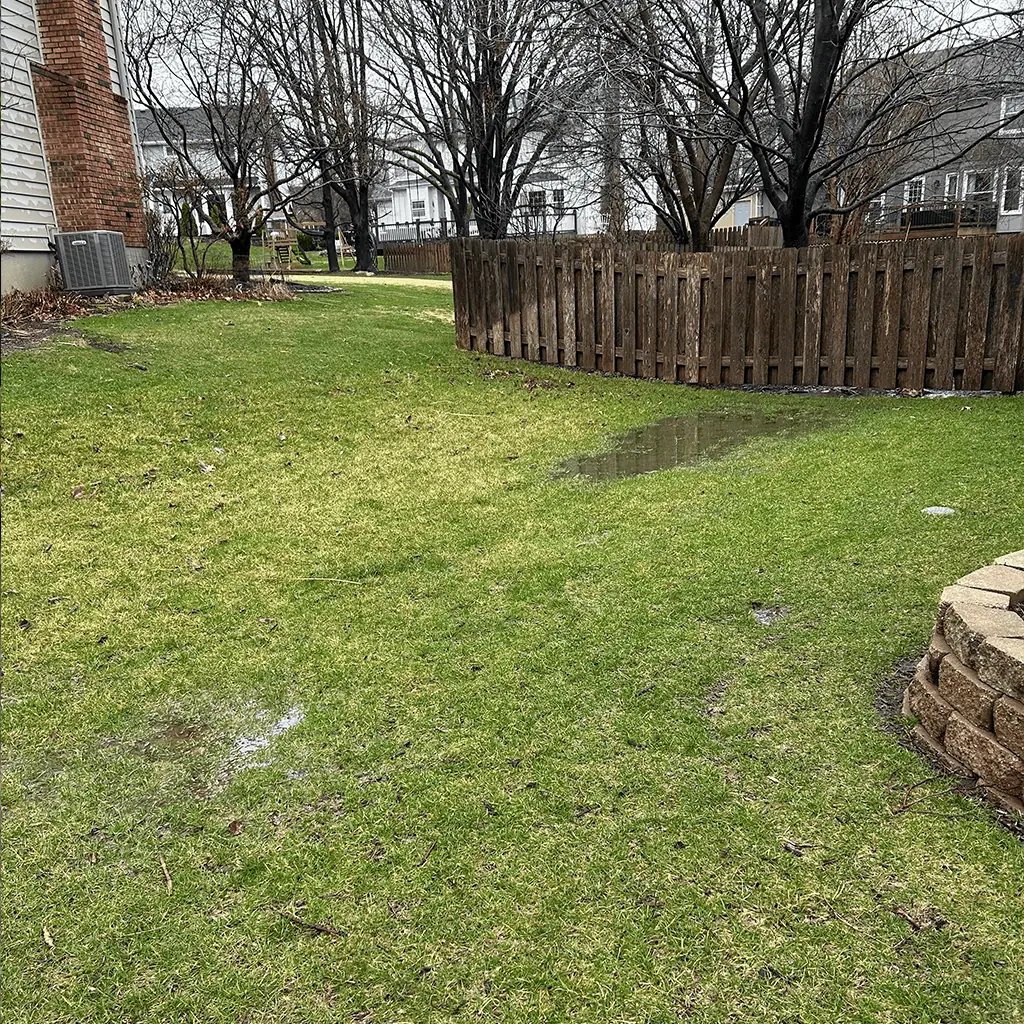
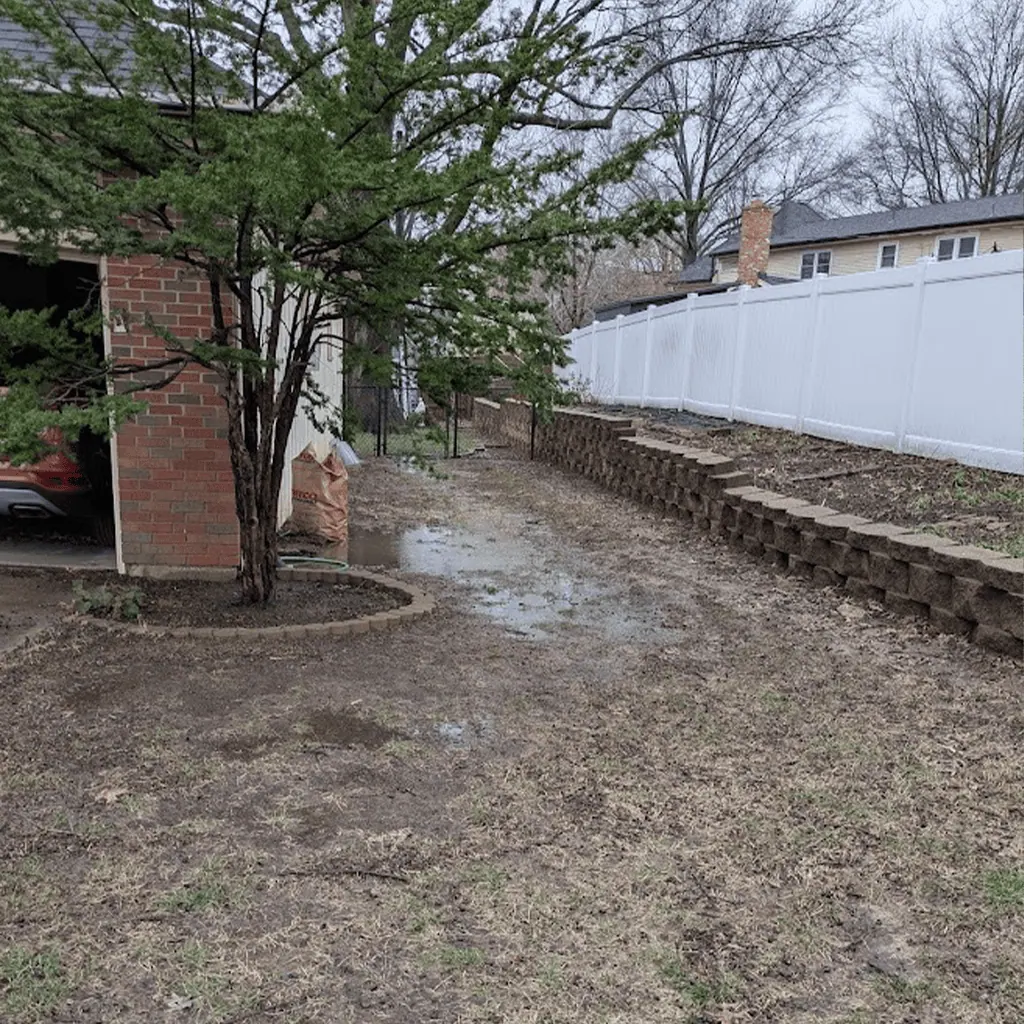
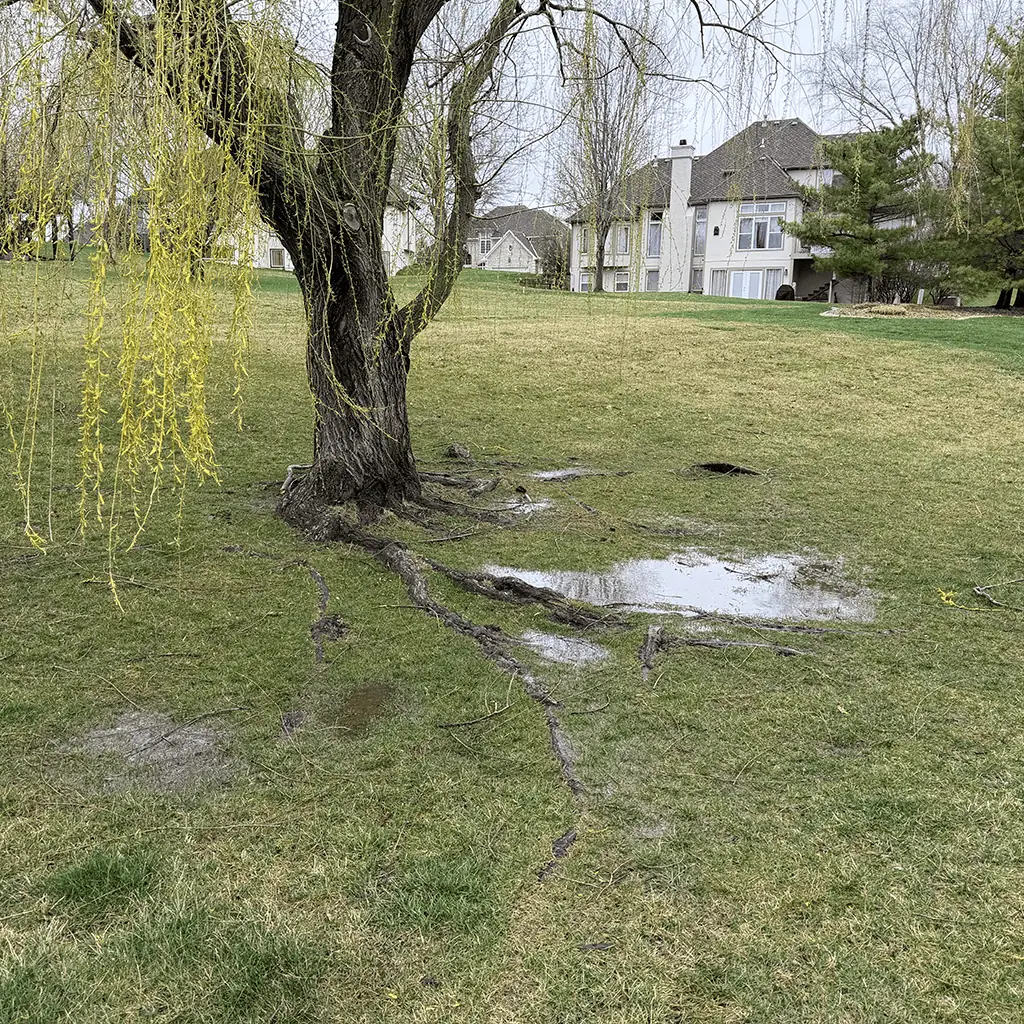

You’re not imagining it, and it’s not just “how yards are” in Kansas City. A soggy yard is a drainage problem, and drainage problems have solutions.
Why Is My Yard So Soggy?
Living in the KC metro, you’re fighting an uphill battle with water (sometimes literally). Here’s what’s usually going on.
1) Clay Soil
This is the big one. Most of the Kansas City area sits on heavy clay. You can check your own property on the USDA Web Soil Survey if you’re curious, but odds are good it’ll confirm what you already suspect. Unlike sandy or loamy soil that lets water pass through, clay holds onto moisture and doesn’t drain. After a good rain, that water just sits there, right at the surface or just below it. Your lawn stays spongy for days.
2) Poor Yard Grading
Your yard needs to slope away from your house so water has somewhere to go. When the grade is flat, or worse, tilted back toward the foundation, water collects instead of draining off.
We see this all the time in newer subdivisions around Lee’s Summit, Olathe, and Blue Springs where the builder’s final grading has settled or was never quite right to begin with.
3) Compacted Soil
Years of foot traffic, mowing the same paths, or leftover compaction from when the house was built can seal the ground nearly shut. Water can’t get through, so it pools.
4) High Water Table
Some parts of the metro, especially neighborhoods near creeks or in low-lying areas, have water tables that sit close to the surface. Even a light rain has nowhere to go because the ground is already full.
5) Downspouts Dumping in the Wrong Spot
Your roof collects a lot of water. Thousands of gallons a year. If your downspouts are just dropping that water right next to the house or into a flat section of yard, you’re pouring fuel on the fire.
Why You Can’t Just Live With It
A soggy yard isn’t just annoying. It’s doing real damage to your property, and the longer it goes, the worse it gets.
Water that sits near your foundation works its way into small cracks over time. That leads to shifting, settling, and eventually the kind of structural repair bills nobody wants to think about. A soggy yard is also one of the earliest warning signs of basement water problems. If the ground around your house is constantly saturated, hydrostatic pressure is building against your basement walls whether you can see it yet or not.
Then there’s the stuff you can see. Dead patches in the lawn. Landscaping that rots out because the roots are waterlogged. Mosquitoes breeding in standing water. And the simple fact that you can’t use your own backyard without ruining your shoes or having to wipe your pet’s paws off when they come inside.
Also, if you’re thinking about selling at any point, drainage issues are a red flag that home inspectors will catch.
How We Fix Soggy Yards
There’s no one-size-fits-all answer here. Water doesn’t lie. It follows the path of least resistance, and the right fix depends on where the water is coming from and where it needs to go. We look at the whole property before recommending anything.
That said, here are the solutions we install most often for soggy yard problems in Kansas City:
French Drains
A French drain is a gravel-filled trench with a perforated pipe that collects water below the surface and redirects it away from the problem area. For KC’s clay soil, this is often the most effective option. We’ve installed hundreds of these across the metro. You can learn more on our French drain installation page.
Yard Regrading
Sometimes the simplest fix is reshaping the land. Proper grading creates a gentle slope, typically about 1 inch of drop every 8 to 10 feet, so water naturally flows away from the house. This is often the first step before any other system goes in.
Catch Basins
If you’ve got one specific low spot where water always collects, a catch basin captures that surface water and channels it underground to a discharge point. Simple, targeted, effective.
Buried Downspouts
We connect your downspouts to underground drain lines that carry roof runoff 15 to 20 feet or more away from your foundation. You’d be surprised how much of your soggy yard problem can disappear just by rerouting the water your gutters are already collecting.
Dry Creek Beds
For properties with natural water flow paths, a dry creek bed gives that water a proper channel during storms and looks great the rest of the time. It’s drainage that doubles as a landscape feature.
Berms and Swales
Berms are raised sections of earth. Swales are shallow channels. Together, they redirect surface water across your property. This is especially useful for larger lots or situations where water is flowing in from a neighbor’s yard.
How the Process Works
We don’t guess, and we don’t push a standard package on every property. Here’s what to expect:
First, we walk your property with you. We look at where water is collecting, trace where it’s coming from, and evaluate the soil and grading. The goal is to understand the full picture, not just treat the symptoms.
From there, we design a drainage plan specific to your property. We’ll explain what we’re recommending and why, and we’ll adjust the plan based on your input and budget. No jargon, no pressure.
Then we build it. Our crews handle the installation start to finish using materials we’ve tested across hundreds of jobs. We clean up after ourselves. Your yard will look better when we leave than it did when we showed up.
And we back everything with a 10-year workmanship warranty. If something isn’t performing the way it should, we come back and make it right.
Why This Is Such a Common Problem in Kansas City
If you’ve been here long enough, you know KC weather doesn’t do anything gently. We get 40-plus inches of rain a year, and a lot of it comes in those heavy spring and summer downpours that dump inches in a few hours. The soil can’t keep up.
I’s not just the rain. Our clay soil expands when it’s wet and shrinks when it dries out. That constant cycle creates cracks and channels underground that make drainage patterns worse over time. Winter freeze-thaw does the same thing. It’s a year-round process working against your yard.
This is why hiring a drainage specialist matters. A landscaper or general contractor might throw some topsoil on the problem or run a single pipe to the street, but if they don’t understand the soil, the grade, and the full water flow pattern, it comes back. We’ve repaired a lot of systems that were installed by someone who didn’t specialize in this. It’s not theory for us. We’re out in the dirt fixing drainage every day.
Common Questions About Soggy Yards
How do I know if my soggy yard needs professional help?
If your yard is still wet 24 to 48 hours after it rains, or if the same spots flood every time, that’s not going to fix itself. Same thing if the ground feels soft and spongy even during dry stretches. A consultation will tell you exactly what’s going on and what it would take to fix it.
Will this also protect my foundation?
Almost always, yes. A soggy yard and foundation water problems usually share the same root cause: water that’s not being directed away from the house. Fix the drainage and you’re likely protecting both.
How long does it take?
Most projects wrap up in one to three days, larger or commercial projects can take more than a week. We’ll give you a clear timeline during the estimate.
Do you work in my area?
We cover the full KC metro on both sides of the state line. That includes Lee’s Summit, Overland Park, Olathe, Liberty, Blue Springs, Independence, Lenexa, Shawnee, Gladstone, Parkville, and the surrounding areas.
What does it cost?
It depends on the property and what’s needed. We provide custom estimates with transparent pricing. No hidden fees. The best way to get a real number is to book an estimate so we can look at your specific situation.
Can I fix this myself?
Small things, like extending a downspout a few extra feet, sure. But for a yard that’s consistently soggy, especially in clay soil, you really need a system that’s designed and installed correctly. We’ve fixed plenty of DIY attempts and landscaper installs that failed within a year or two. Spending a little more up front for a proper solution saves you from paying twice.
Ready to Fix Your Soggy Yard?
You shouldn’t have to tiptoe around your own property every time it rains. We’ve helped hundreds of KC homeowners get their yards back with permanent drainage systems built for our soil and our weather.
Book your estimate today. We’ll come out, look at what’s happening with the water on your property, and give you a straight answer on what it’ll take to fix it.