

A retaining wall is built to hold back soil. What it is usually not built to hold back is water, and wet soil pushes far harder than dry soil. When rain soaks the ground behind a wall and has no way out, the pressure builds against the back of the block until the wall leans, bulges or lets go. That is why most failed walls we see failed because of drainage, not because the block was too small.
How retaining wall drainage works
The goal is simple: water that reaches the back of the wall should drop straight down and leave at the bottom, instead of building up and pushing. Four pieces make that happen.
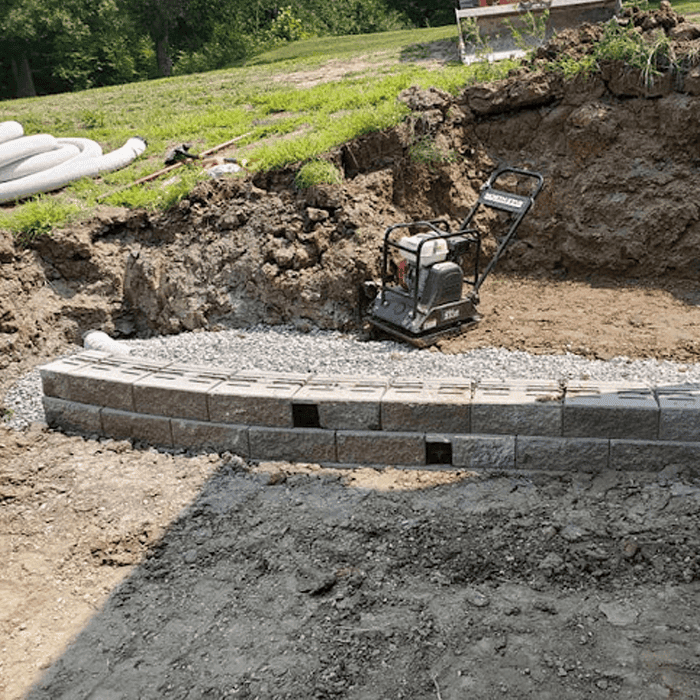
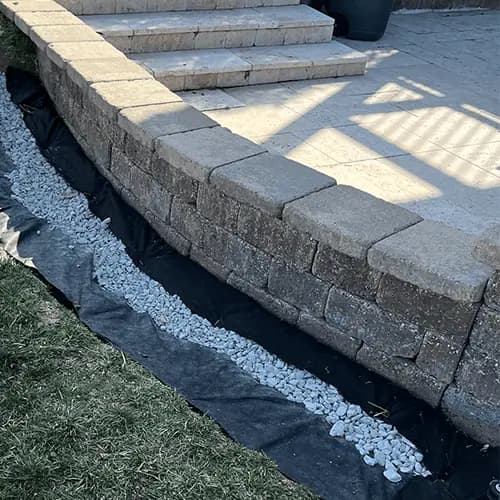
- Drainage stone behind the block. A zone of clean, washed, angular stone directly behind the wall, usually about a foot thick. Water falls through it instead of pressing against the block. See best gravel for drainage for what belongs there.
- Filter fabric between the soil and the stone. Without it, the soil behind slowly washes into the stone and fills the gaps, and the drainage zone stops draining.
- A perforated pipe at the base. Laid at the bottom of the stone with a fall to an outlet, so water collected behind the wall is carried out rather than soaking into the base. It works the same way as a French drain, because that is what it is.
- Surface water sent elsewhere. Downspouts and runoff that dump behind the wall overload even good drainage. Grade the top so water runs away from the wall, and pipe downspouts past it.
Signs a retaining wall is not draining
- The wall leans outward or bulges in the middle.
- Water seeps out of the joints or the face of the wall after rain.
- Soil or fine sand washes out between the blocks.
- White, chalky streaks (efflorescence) on the face from water passing through.
- A soggy strip or standing water along the top or the base of the wall.
- Blocks have shifted, cracked or separated at the corners.
Caught early, the water can sometimes be stopped before it reaches the wall. Once a wall is visibly moving, the drainage behind it has usually failed, and the honest answer is a rebuild with drainage done properly.
Fixing water around an existing wall
If the wall is still sound, the job is to keep water from reaching the back of it:
- A French drain or curtain drain along the top of the wall to intercept groundwater on the way down.
- A swale above the wall to steer surface runoff around it.
- Buried downspouts so roof water stops landing behind the wall.
- A drain along the base where water comes out of the wall, so it stops undermining the footing and flooding the lawn below.
How we build walls in Kansas City
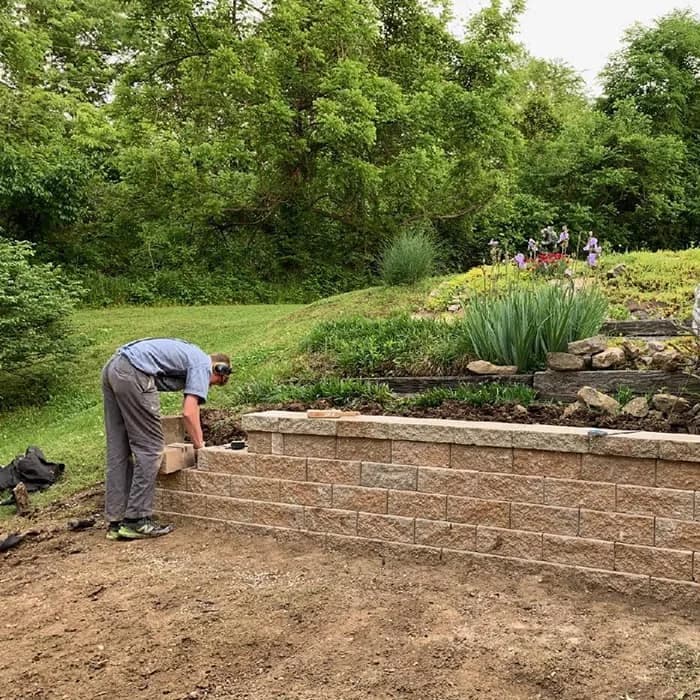
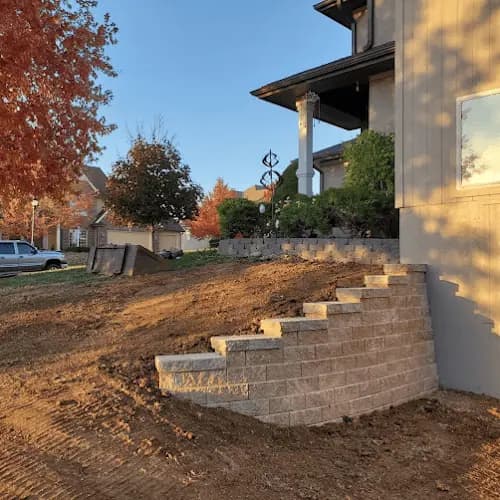
We plan a wall’s drainage before the first block goes down. Clay soil and heavy spring storms leave no room to skip it here. See our retaining wall installation page for the rest of how we work.
Frequently Asked Questions
Does every retaining wall need drainage?
Any wall holding back soil that gets wet does, which in Kansas City is nearly all of them. Very short garden edging can get by without it. Anything holding back a real slope needs drainage stone behind it and a way for water to leave at the base.
Where should the drain pipe go behind a retaining wall?
At the bottom of the drainage stone, behind the first course of block, laid with a fall toward an outlet. The pipe has to discharge somewhere: out the end of the wall, through the face at a low point, or into a solid line that carries the water away.
What gravel goes behind a retaining wall?
Clean, washed, angular stone with no fines, usually in a zone about a foot thick directly behind the block. Fines and round pea gravel do not belong there. Our gravel guide explains why.
Can drainage be added to an existing retaining wall?
Sometimes. If the wall is still sound, we can often intercept water before it reaches the wall with a French drain or swale along the top, and redirect downspouts that dump behind it. If the wall is already leaning or bulging, the drainage behind it has usually failed and the wall needs rebuilding with drainage done properly.
How much does a retaining wall with drainage cost?
On our recent projects, retaining wall work has run from about $3,200 to $13,750, depending on the length and height of the wall, the block, and how much grading and drainage goes with it. We plan the drainage in from the start rather than adding it later. Our project minimum is $5,000.
Worried about a wall?
We will look at the wall, the slope above it and where the water is coming from, and tell you plainly whether it can be saved. Book a free estimate or call (816) 826-8794.