

If you’ve ever battled soggy soil, a flooded driveway, or standing water in your yard, you already know how critical proper drainage is. One of the most effective (and affordable) solutions is using the right kind of gravel. But with so many types available, how do you know which is the best gravel for drainage?
In this guide (which we built from internal documents that we use to install services for our clients), we’ll walk you through the top gravel options used in drainage systems and help you decide which is best for your project.
Why Gravel Is Used for Drainage
Gravel helps water flow through the soil more easily by creating air pockets, voids, or gaps between the stones. These gaps act like tiny passageways for water to escape and trickle down instead of pooling on the surface. But not all gravel works equally well… size, shape, and cleanliness all affect performance!
1) Crushed Stone (Angular Gravel)

Best for: French drains, driveways, base layers, structural drainage
Crushed stone is mechanically crushed and screened to specific sizes—typically from ½ inch to 1½ inches. Its angular shape allows pieces to lock together, forming a stable base while providing plenty of space for water to flow.
Pros:
- ✅ Excellent water flow and structural stability
- ✅ Angular edges create interlocking support
- ✅ Available in standard sizes like #57 stone (¾ inch)
- ✅ Widely available at landscape centers and quarries
Cons:
- ❌ Rough texture isn’t ideal for barefoot areas
- ❌ Cheaper options may include dust or small particulate that reduce drainage
- ✅ Tip: Always choose “washed” crushed stone and use geotextile fabric to keep soil from clogging the system
2) Pea Gravel
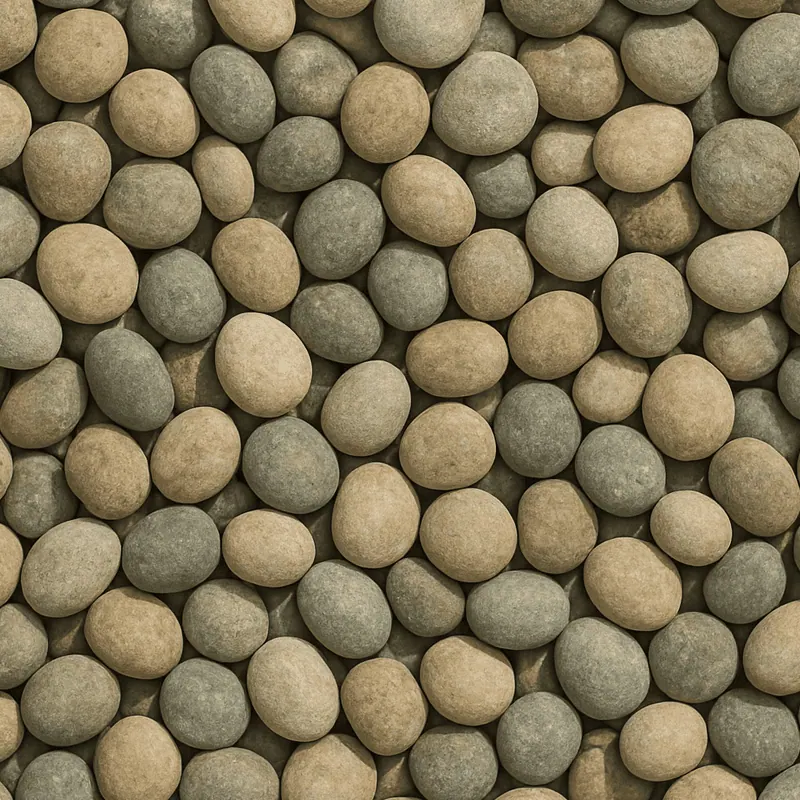
Best for: Decorative drainage, garden beds, light-use French drains
Pea gravel consists of smooth, rounded stones about ⅛ to ⅜ inch in size – roughly the size of a green pea. It’s popular in landscaping for both its appearance and permeability.
Pros:
- ✅ Allows water to pass through easily in loose applications
- ✅ Attractive natural colors for landscape design
- ✅ Comfortable underfoot – great for walkways or kids’ play areas
Cons:
- ❌ Doesn’t interlock, so it shifts easily
- ❌ Not ideal under heavy loads (like cars or structures)
- ❌ Can compact over time, reducing drainage effectiveness
Pea gravel is best used where aesthetics or visual appeal matter and where drainage doesn’t need to support structural loads.
3) River Rock
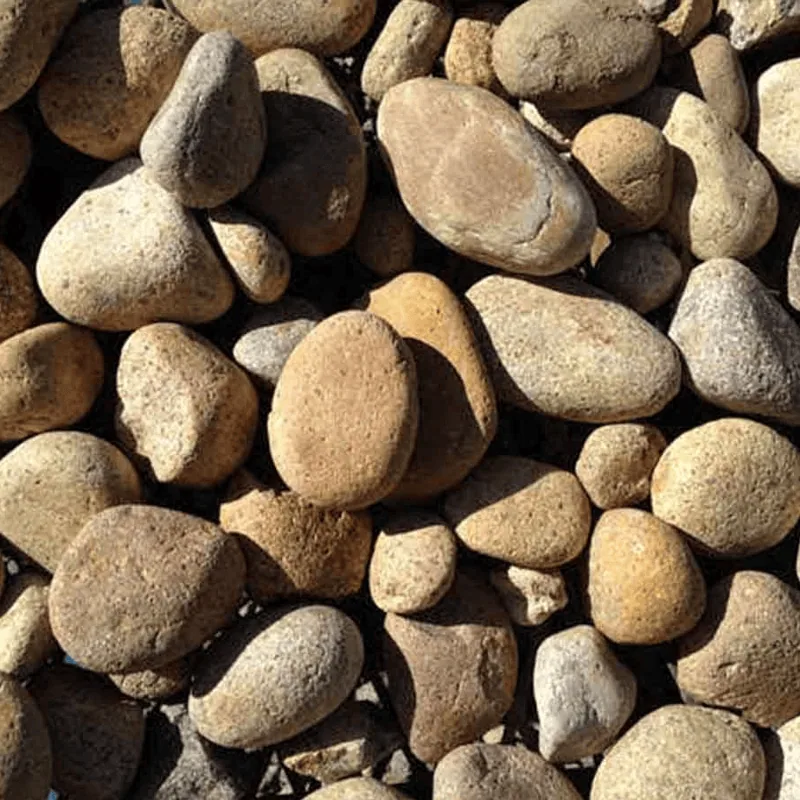
Best for: Downspout ends, decorative swales, erosion control
River rock is larger and smoother than pea gravel, often 1 to 3 inches across. These rounded rocks are commonly used in dry creek beds and around foundations.
Pros:
- ✅ Great for reducing erosion and slowing runoff
- ✅ Visually appealing and natural-looking
- ✅ Doesn’t compact – lets water percolate through
Cons:
- ❌ Tends to shift or roll unless contained
- ❌ More expensive than other gravel types
- ❌ Large voids allow debris to enter—less ideal for subsurface drains
To keep river rock from moving, install edging and lay it on a stable gravel base with fabric underneath.
Crushed Stone vs. Pea Gravel
When comparing crushed stone vs. pea gravel for drainage, crushed stone typically performs better due to:
- Higher void space: Irregular shapes leave more room for water
- Greater stability: Locks together for structural support
- Less compaction over time
Pea gravel may be suitable for light-duty or decorative use, but crushed stone is the top choice for long-lasting, functional drainage systems (especially French drains).
Best Gravel for French Drains
A French drain is a gravel-filled trench with a perforated pipe that redirects water. The best gravel for French drains is Angular, washed #57 stone. We’ve done many test to find the come to this conclusion. Here is an example of a French drain speed test where we compared 5 different variations and timed them:
Pro Tips:
- Line the trench with geotextile fabric to prevent soil intrusion
- Lay a few inches of crushed stone under the pipe and surround it entirely
- Maintain a 1% slope for water flow
- Avoid using pea gravel alone—it compacts and clogs more easily
Best Gravel for Driveway Drainage
Whether you’re building a gravel driveway or improving runoff from a paved one, the right gravel makes all the difference.
For gravel driveways:
- Start with a base layer of #3 stone (1–2 inches) for deep drainage
- Add a middle layer of #57 stone (¾ inch)
- Finish with crusher run (mixed fines + gravel) for a compact top surface
This multi-layer system drains well while staying solid under heavy use.
For paved driveways, install gravel-filled trenches or swales beside the pavement using #57 crushed stone to guide water away and prevent flooding.
Best Gravel for Garden Drainage
Garden beds with poor drainage can harm plants. Gravel helps in two ways:
1. Dry Creek Beds:
Dig a shallow trench where water collects and fill with pea gravel or river rock. This creates a natural-looking drainage channel that prevents waterlogging.
2. Raised Beds or Planters:
A layer of coarse gravel at the bottom of a planter can keep drainage holes from clogging, although it’s not a substitute for well-draining soil.
Pro Tip: Use landscaping fabric under gravel in garden paths or swales to prevent stone from sinking and to block weeds.
Choosing the Right Gravel for Your Project
| Project Type | Best Gravel Type | Size Range |
|---|---|---|
| French drain | Washed crushed stone | ¾-1 inch (#57) |
| Driveway (base) | Coarse crushed stone | 1–2 inch (#3) |
| Driveway (top) | Crusher run or DGA | Mixed sizes |
| Decorative swale | Pea gravel or river rock | ⅜–2 inches |
| Garden path/creek | Pea gravel | ⅜ inch |
| Downspout runoff | River rock | 2–4 inches |
The best gravel for drainage depends on your needs—whether you’re installing a heavy-duty French drain, a decorative dry creek bed, or a permeable driveway. In most cases, angular crushed stone is the winner for performance, while pea gravel and river rock shine in aesthetics and light applications.
Whatever you choose, make sure your gravel is clean (washed), the right size, and installed with proper slope and separation fabric. That’s the recipe for a dry yard and a happy homeowner.