

A driveway is a big, hard, sloped surface that sends every drop that lands on it somewhere in a hurry. When that somewhere is your garage, the strip of lawn beside the drive, or the low end where ice builds up all winter, it needs a drain. The fix depends on where the water comes from and where it can go, so that is where we start.
The driveway problems we fix most
| What you see | What usually fixes it |
|---|---|
| Water running down the drive into the garage | A channel drain across the driveway in front of the garage door, piped to a discharge point. |
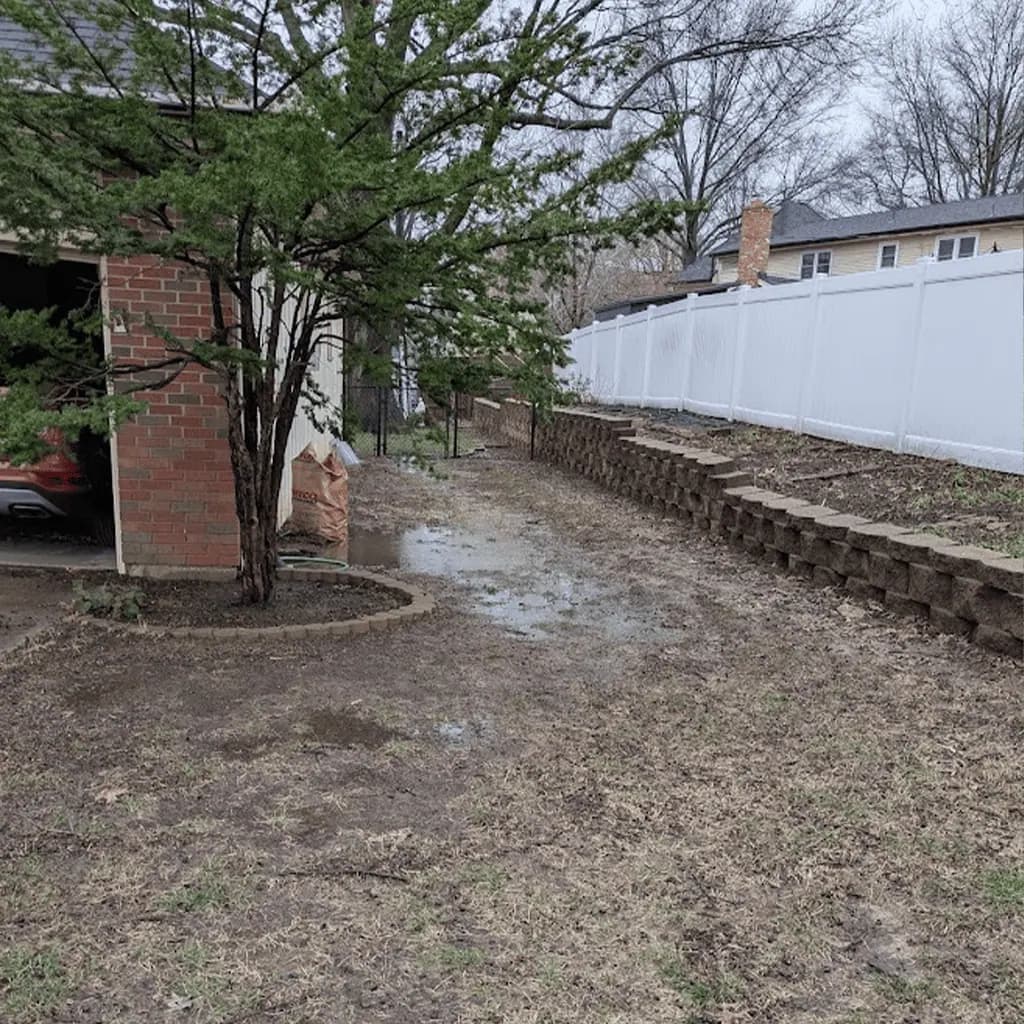
| A soggy strip of lawn along the driveway edge | A French drain or an open rock drain along the edge to catch the runoff. |
| A puddle or ice sheet at the low end of the drive | A catch basin or channel drain at the low point. |
| Downspouts dumping onto the driveway | Buried downspouts run under the concrete instead of across it. |
| A gravel driveway rutting and washing out | A French drain alongside and the right base stone. See best gravel for drainage. |
Channel drains: the fix for water heading into the garage
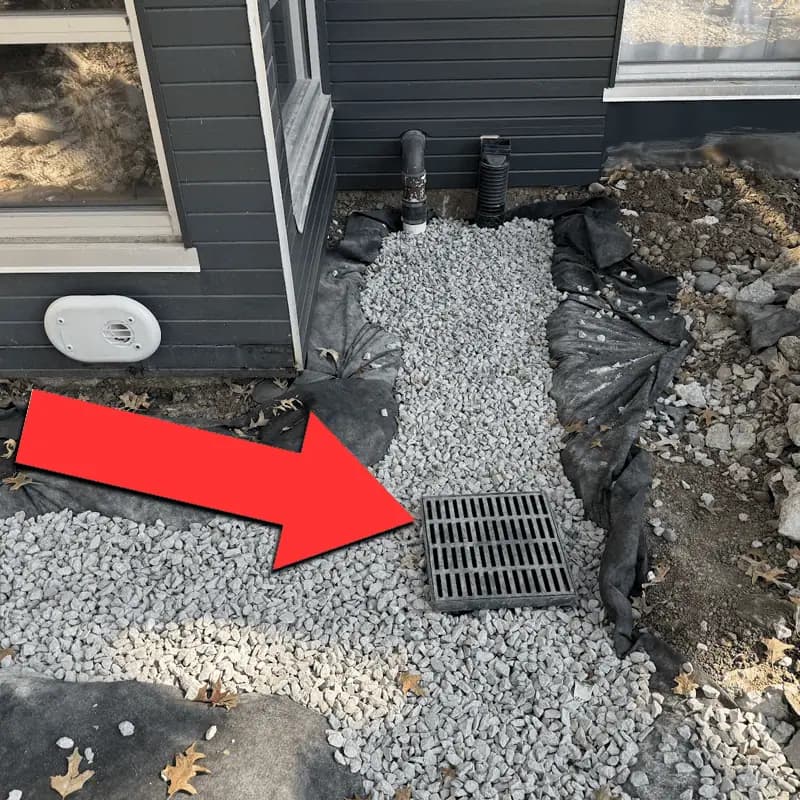
A channel drain (also called a trench drain) is a narrow drain body with a grate, set into the concrete across the path the water takes. It sits very slightly below the surface so water flows into it rather than over it. Done right, it catches a sheet of water across the whole width of the drive before it reaches the garage door.
Three things decide whether one works:
- Placement. At the bottom of the slope, across the full width the water travels, usually just in front of the garage door.
- A grate rated for cars. A patio-grade grate will crack under a vehicle. Driveway channels need a grate and body built for traffic loads.
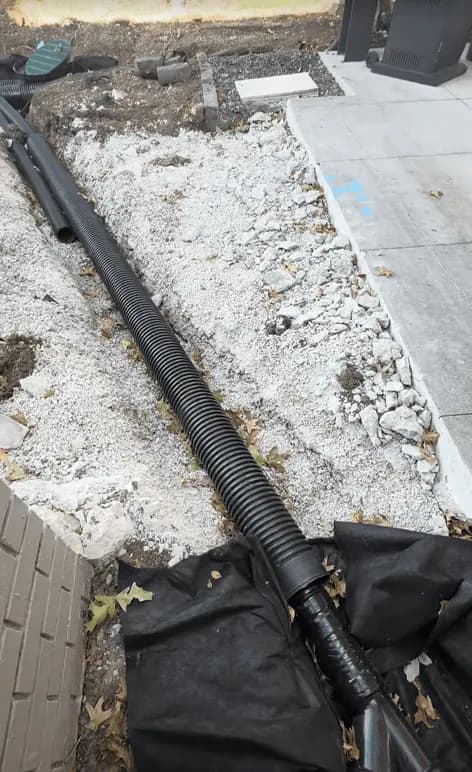
- Somewhere for the water to go. The channel is only the inlet. Solid pipe has to carry the water to a pop-up emitter, the street, a dry well, or an outdoor sump pump when the driveway is the lowest point on the lot.
Channel drains also work on patios and around pool decks. Our patio drainage page covers those.
Getting pipe past concrete without breaking it
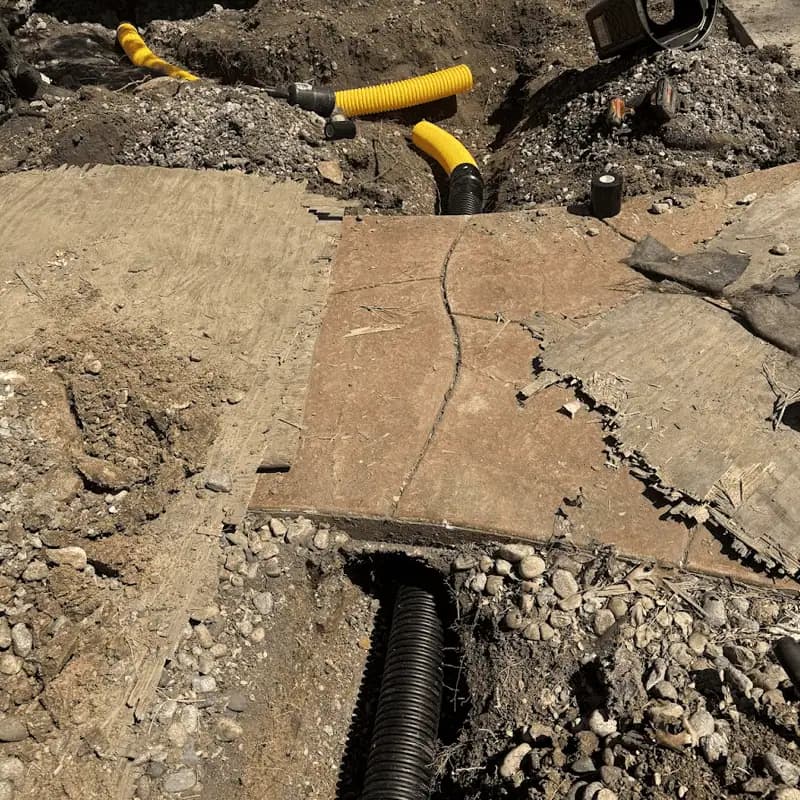
The water usually has to cross a sidewalk, a walkway or the drive itself to reach a good discharge point. Tearing out concrete to lay pipe is expensive and leaves a patch. We tunnel under it with a boring tool instead. When a homeowner is planning new concrete, we lay a larger pipe as a sleeve first, so the drain pipe inside can be reached or replaced later without touching the slab.
Frequently Asked Questions
What is a channel drain?
A channel drain, also called a trench drain, is a long, narrow drain set into concrete with a grate on top. It is installed very slightly below the surface so water running across the slab drops into it, then a solid pipe carries the water away. It is the usual fix for water running down a driveway into a garage.
Where does the water from a channel drain go?
Somewhere lower than the drain, through solid pipe: a pop-up emitter in the lawn, the street, a dry well, or an outdoor sump pump if the driveway is the lowest point on the lot. A channel drain without a real outlet just becomes a long puddle with a grate on it.
Do you have to tear out my driveway?
Not to get a pipe across it. We tunnel under sidewalks and drives with a boring tool, and when a homeowner is planning new concrete we lay a sleeve first so the pipe can be reached later without breaking the slab. A channel drain itself does have to be cut into the concrete where it sits.
Does a gravel driveway need drainage?
Often, yes. Gravel driveways wash out and rut when water runs down them or collects at the low end. A French drain alongside, the right base stone, and a crown that sheds water to the edges all help. Our gravel guide covers which stone to use.
How much does driveway drainage cost?
It depends on how much concrete is involved, how far the water has to travel and where it can go, so we quote it on site after looking at the whole slope. Our project minimum is $5,000.
Have us look at the whole slope
Driveway water almost always starts somewhere other than where it ends up. We walk the drive, the roof lines and the yard with you and give you a firm written number. Book a free estimate or call (816) 826-8794.