

A downspout collects the rain from a whole section of roof and drops it in one spot. If that spot is the base of your foundation, you are pouring hundreds of gallons against your basement wall every storm. A downspout extension moves that spot further out. There are five common ways to do it, and they range from a $10 part to a buried drain line.
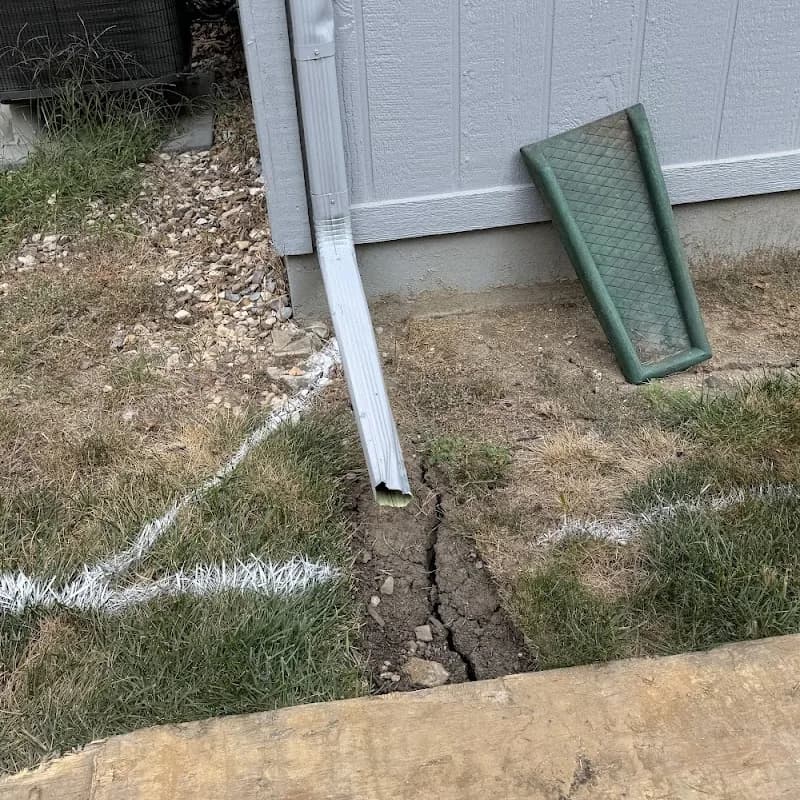
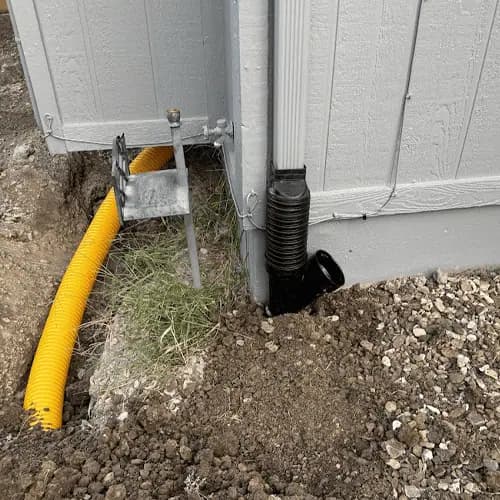
Every downspout extension option, compared
| Option | How far it moves the water | Good for | Watch out for |
|---|---|---|---|
| Splash block | 1 to 2 feet | Slowing water so it does not dig a hole. | Barely moves the water at all. Not a foundation fix. |
| Flip-up or roll-out extender | 3 to 6 feet | Downspouts over beds and patios you never mow. | Gets flipped up for mowing and left up. |
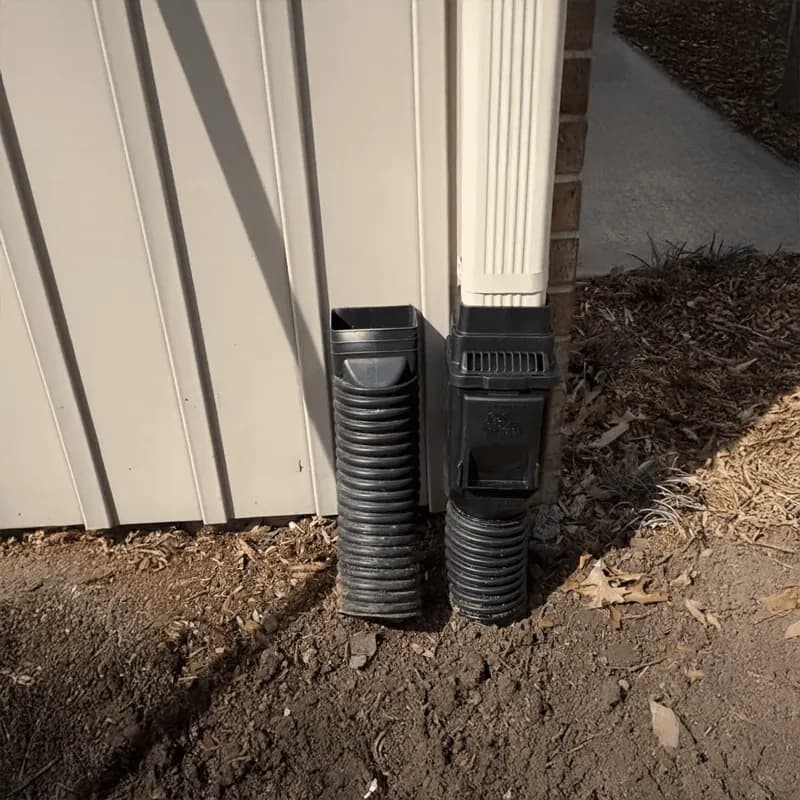
| Flexible extension | Up to about 6 to 8 feet | A cheap temporary fix. | Kinks, cracks in sun and frost, and is a trip hazard. |
| Rigid above-ground extension | As far as you run it | Side yards nobody walks or mows through. | Ugly, in the way, and easily knocked loose. |
| Buried downspout drain | As far as it needs to go | Any downspout near a lawn, a walkway, or a wet basement. | Needs real fall and a proper outlet, and costs more up front. |
Above-ground extensions are fine where nobody walks or mows. Everywhere else, the problem with them is not that they fail, it is that they get moved. That is the main reason homeowners call us to bury their downspouts.
How a buried downspout drain works
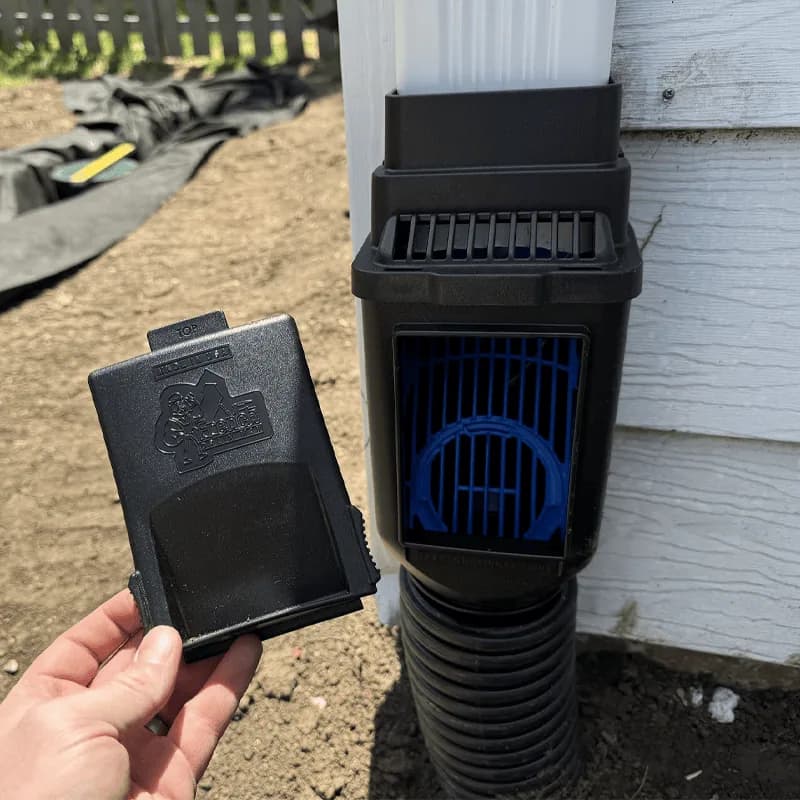
- An adapter at the downspout connects it to the buried line. A vented leaf filter riser here catches leaves and roof grit before they get into the pipe.
- Solid pipe underground, laid with a steady fall away from the house. Not perforated, so roof water is not released into the soil next to the foundation.
- An outlet well away from the house: a pop-up emitter in the lawn, a daylight outlet on a slope, the street, or a dry well when there is nowhere downhill to go.
Signs an extension is not enough
- Water in the basement along the wall where a downspout comes down.
- A soggy strip, a washout, or a hole where the downspout empties.
- Soil that slopes back toward the house, so extended water runs straight back.
- Extensions that keep getting moved, crushed or knocked off.
- Several downspouts emptying into the same low corner.
If any of those sound familiar, see basement waterproofing cost for what fixing it properly runs, or yard drainage solutions for the bigger picture.
Frequently Asked Questions
How far should a downspout extend from the house?
Far enough that the water lands on ground sloping away from the house and cannot soak back to the foundation. A common rule of thumb is at least 4 to 6 feet. On Kansas City clay, or where the yard slopes back toward the house, further is better, which is where a buried line that releases the water well out in the yard earns its cost.
Are flip-up downspout extensions any good?
They work when they are down. The trouble is they get flipped up for mowing and left up, and then the downspout is emptying at the foundation again. They are fine on a downspout over a patio or a bed you never mow.
Can I bury a flexible downspout extension?
We do not recommend it. Thin flexible extensions are made to sit on top of the ground, not under it, so once buried they crush and kink. A buried downspout line should be heavy-duty drain pipe rated for burial, laid with a steady fall to its outlet.
Where should the water from a downspout go?
Somewhere lower than the house, far enough away that it cannot run back: a slope that drains away, a pop-up emitter in the yard, the street, or a dry well when there is nowhere downhill to send it.
How much does it cost to bury downspouts?
On our recent projects, buried downspout drain systems have run about $1,000 to $5,600, depending on the number of downspouts and the length of the runs. A vented leaf filter riser on a downspout is about $80. Our project minimum is $5,000, so downspout drains are usually part of a larger drainage job.
Want your downspouts gone for good?
We will look at every downspout, where its water is going now, and where it should go instead. Prices from our own work, September 2025 to October 2026, are in the FAQ above. Book a free estimate or call (816) 826-8794.