

Basement waterproofing quotes range wildly, because “waterproofing” covers everything from burying two downspouts to digging out a whole foundation. The prices below are not national averages. They are what our own Kansas City projects cost, from High Flow Drainage Solutions quotes and invoices from September 2025 to October 2026.
The pattern in those numbers is the most useful thing on this page: most wet basements we see are fixed from the outside, and the outside fixes are usually the cheaper ones.
What our recent waterproofing work has cost
| Type of project | Price range | What it fixes |
|---|---|---|
| Buried downspout drains | About $1,000 to $5,600 | Roof water dumped at the foundation, the most common cause of a wet basement wall. Price follows the number of downspouts and the length of the runs. |
| Regrading with downspout drains | About $1,100 to $6,300 | Soil that slopes toward the house, sending surface water to the foundation. |
| Walkout and egress drains | $1,380 to $9,205 | Water collecting at a basement walkout door or egress stairwell: a replaced drain, a French drain around the walkout, or regrading away from it. |
| Sump discharge lines | $1,210 to $5,930 | A sump pump dumping next to the house, so the same water soaks back and gets pumped again. |
| Interior perimeter drain and sump | Quoted on site by our interior partner | Groundwater coming up at the wall-floor joint or through the floor. |
| Exterior excavation and membrane | Quoted on site | Water coming through the foundation wall itself when outside drainage alone cannot stop it. |
Prices are the line-item totals from our own quotes and invoices, September 2025 to October 2026. Our project minimum is $5,000, so smaller items are usually combined on one visit.
Why we start outside
Water in a basement almost always got there because too much water was allowed to sit against the foundation. In Kansas City clay that is usually one of three things: downspouts emptying at the wall, soil sloping toward the house, or a low spot that holds water next to the foundation after every storm.
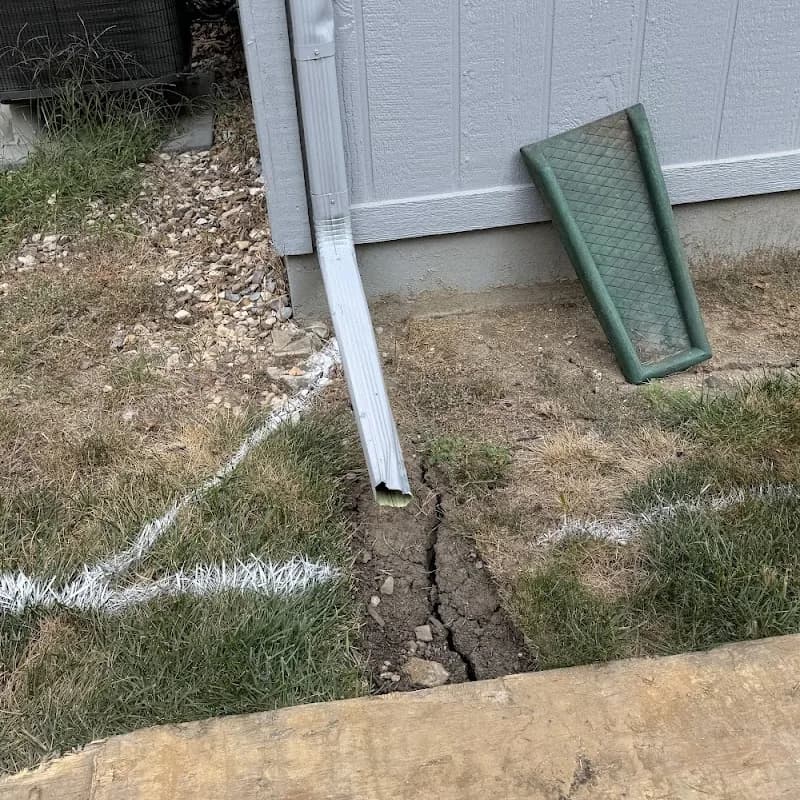
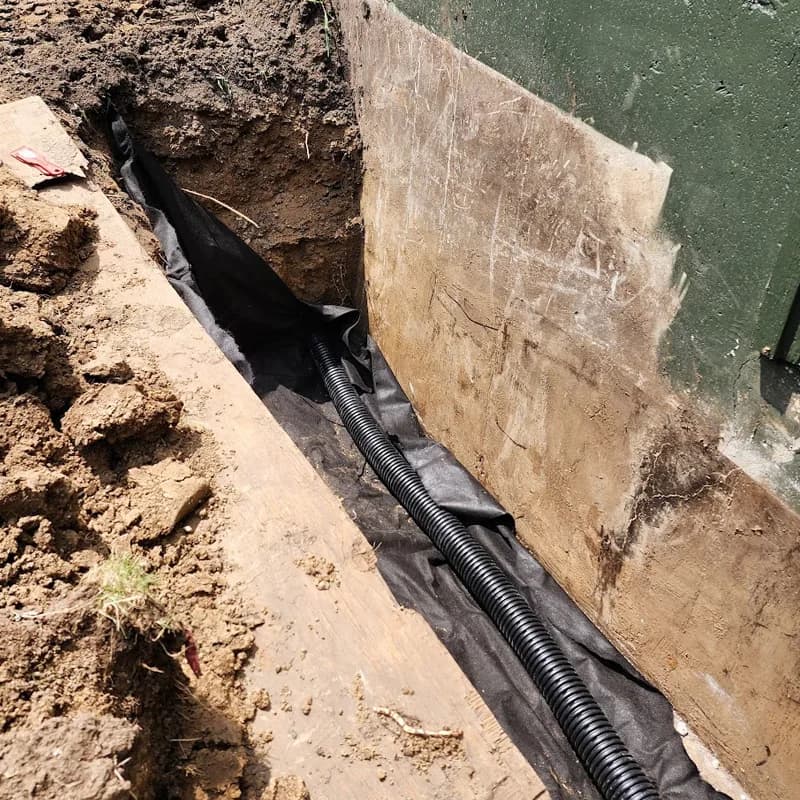
Fixing those causes outside takes pressure off the wall for good. Waterproofing the inside without fixing them means the water is still there, just managed after it arrives. See water in your basement after rain for how to tell which you have.
When interior waterproofing is the right call
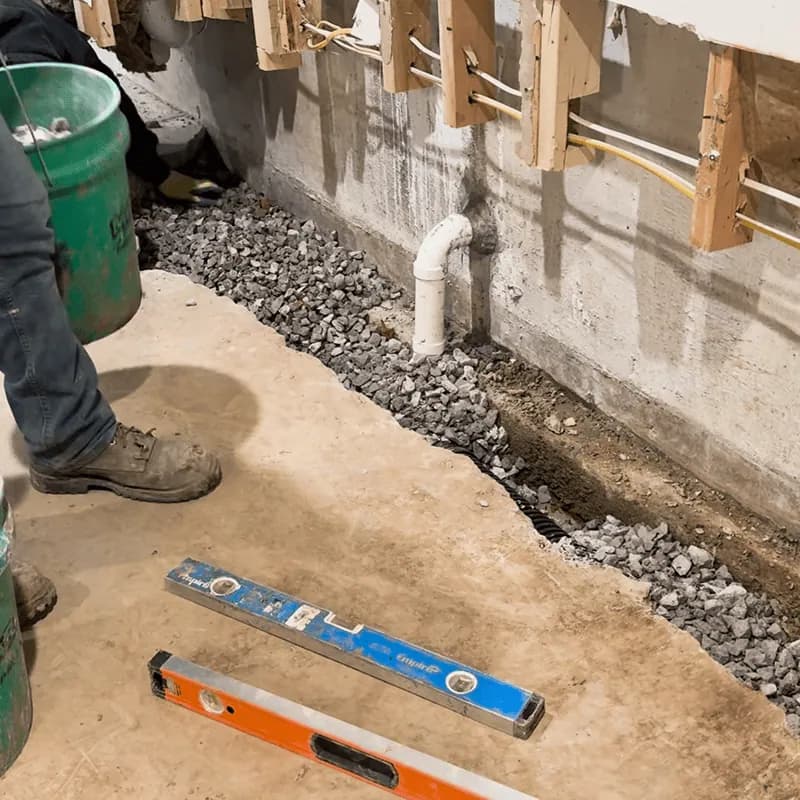
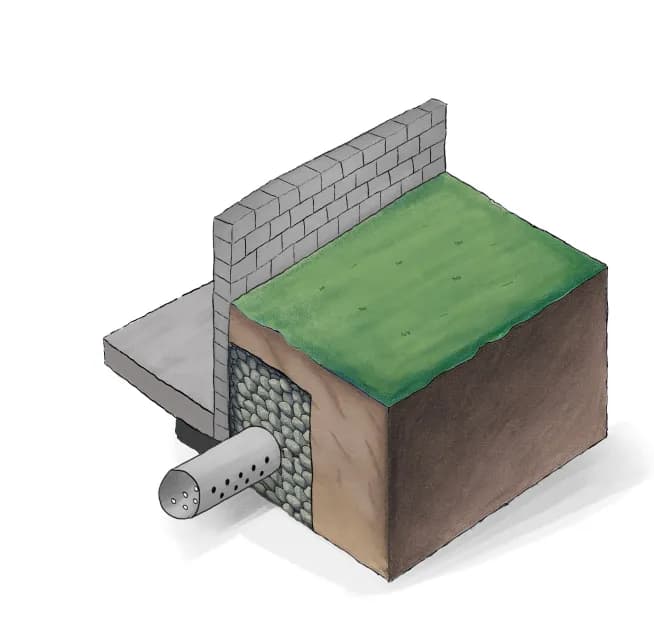
Interior drains and a sump pump earn their cost when the water is coming from below rather than from the surface: a high water table, a house built low on the lot, or groundwater that rises through the floor no matter what happens outside. An interior French drain (interior perimeter drain) runs in a trench cut along the inside edge of the floor, collects water at the base of the walls, and carries it to a sump pit.
Interior waterproofing isn’t our specialty, and we’ll be honest about that. When a basement really needs an interior system, we bring in an interior specialist we trust as a subcontractor, or refer you to them directly. You get someone who does this work every day, and we stick to the outside, where most Kansas City basement water starts.
Read more on our basement drainage solutions and basement waterproofing services pages.
What drives the price
- Where the water is coming from. Surface water fixes are far cheaper than groundwater fixes.
- How much digging. Trench length, depth, and whether concrete, patios or landscaping are in the way.
- Where the water can go. A short run to a slope is cheap; a long run to the street or a leach bed on a flat lot is not.
- Access. Tight side yards, decks and finished basements all add labor.
Frequently Asked Questions
Is interior or exterior basement waterproofing better?
Exterior fixes stop water before it reaches the wall, so they are the better first step whenever the water is coming from the roof, the grading or the yard, which in Kansas City it usually is. Interior drains and a sump pump manage water that is already under or against the foundation, which is the right answer for a high water table or when the outside cannot be fixed. Many basements end up with a little of both.
Why is basement waterproofing so expensive?
Because the expensive part is digging. Exterior membrane work means excavating down the full height of the foundation wall. Interior drains mean breaking out and replacing the basement floor along every wall. That is why it pays to rule out the cheaper surface causes first.
Do you do interior basement waterproofing?
Mostly, no. We specialize in exterior waterproofing. If your basement needs an interior drain system, we will either subcontract it to an interior specialist we trust or refer you to them directly. It isn't our specialty, and you are better off with someone who does it every day than with a company pretending to.
What is an interior French drain?
A perforated pipe laid in gravel in a trench cut along the inside edge of the basement floor, at the base of the walls. It collects water that seeps in at the joint between the wall and the floor and carries it to a sump pit, where a pump sends it outside. It is also called an interior perimeter drain or interior drain tile.
Do sealers and waterproof paint work?
For dampness and very minor seepage, sometimes. They do not stop water that is pushing through under pressure, and they peel when the wall behind them stays wet. Treat them as a finishing layer on a dry wall, not as a fix for a leak.
Do you have a minimum job size?
Yes, our project minimum is $5,000. Smaller items, like a single downspout line, are usually combined with the other drainage work on the same house.
Find out what your basement actually needs
We start every basement estimate outside, because that is where the cheapest fix usually is. If you also need interior work, we’ll tell you and point you to the right specialist. Estimates are free and the price is in writing before any work starts. Book a free estimate or call (816) 826-8794.