

A sump pump battery backup is a second pump that sits in the same pit as your main one and runs off a battery. When the power goes out, or the main pump fails on its own, the backup’s float lifts and it keeps the pit from overflowing. In Kansas City the storms that knock the power out are the same storms that fill your sump pit, which is exactly why the backup matters.
Just need a battery unit added to a working pit? We install backups as part of sump pump and drainage projects, and our project minimum is $5,000. For a standalone battery unit, a plumber is usually the faster and cheaper call. We would rather tell you now than take the call.
Two different failures, two different backups
A sump pump stops pumping for one of two reasons: it loses power, or the pump itself fails. Not every backup covers both. This is the comparison we walk homeowners through.
| Backup type | Covers a power outage? | Covers a pump failure? | Watch out for |
|---|---|---|---|
| Battery backup pump | Yes | Yes | Runtime is limited by the battery. Batteries wear out in a few years. |
| Second plug-in pump | No | Yes | Shares the same outlet and circuit as the primary, so a storm outage takes out both. |
| Water-powered backup | Yes | Yes | City water only, uses a lot of water, needs a backflow preventer. |
| Generator | Yes | No | Someone has to be home to start it, unless it is a standby unit. |
For most basements in the metro, a battery backup is the best all-round answer because it covers both failures without depending on anyone being home.
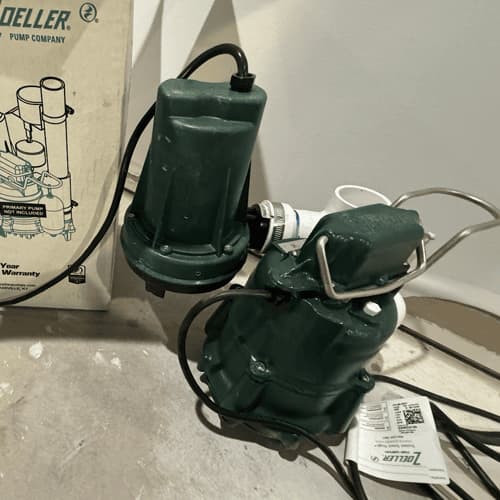
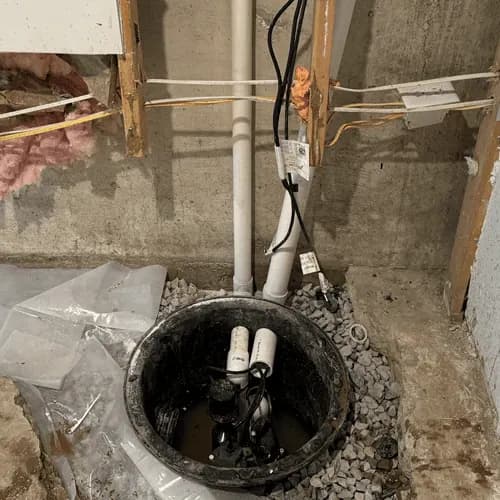
The failure a backup cannot fix: the discharge line
Here is the part most backup sales pitches skip. Both pumps push water out through the same discharge line. If that line is frozen solid, crushed, or clogged, it does not matter how many pumps are in the pit. They will run against a blocked pipe until the motors burn out, and the pit will overflow anyway.
That is the most common way we see sump pumps die in a Kansas City winter. So when we install a backup, we look at where the water goes as carefully as the pump itself. Every discharge line we install gets a freeze-protection overflow adapter at the house: if the line downstream is blocked, slots in the fitting let water escape near the house instead of backing up into the pump.
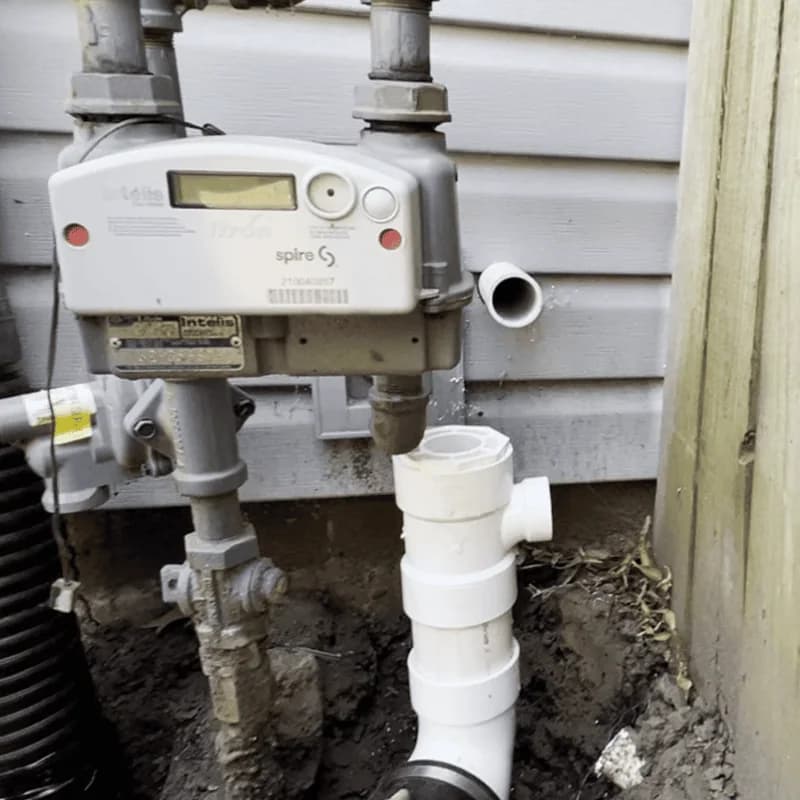
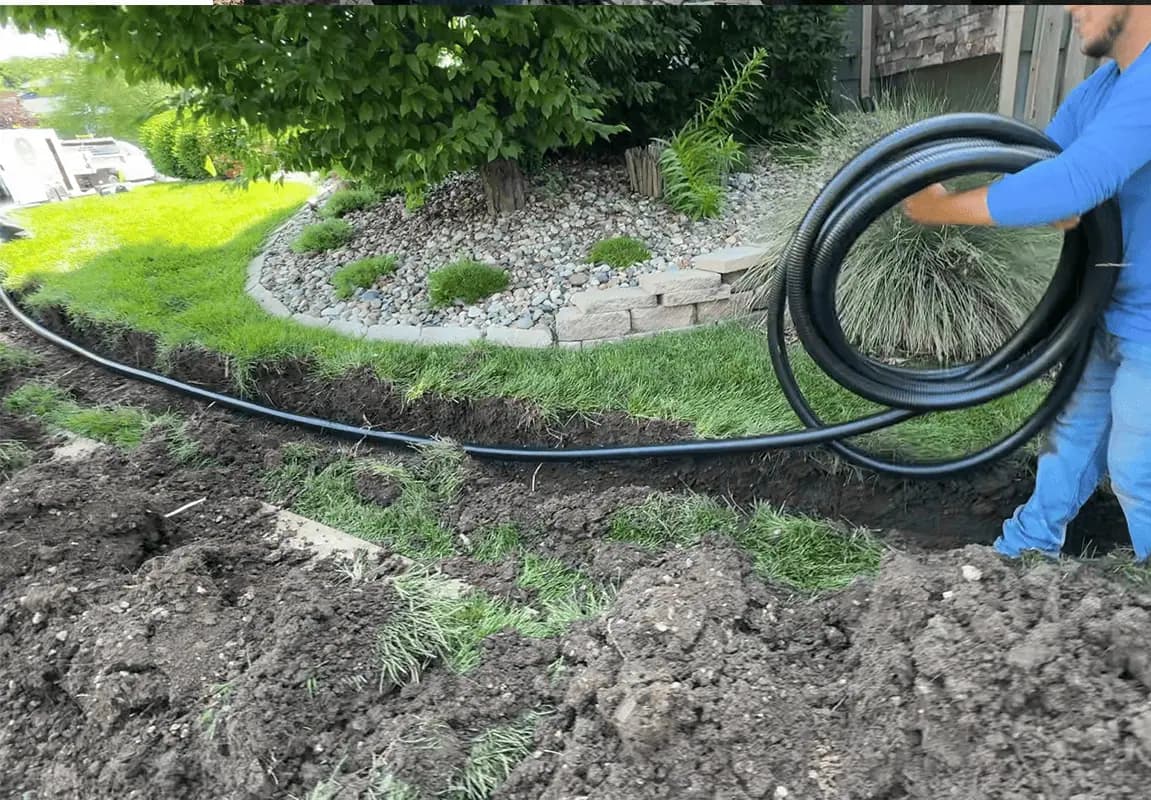
What a good backup install includes
- A pit big enough for two pumps, with the backup’s switch set above the primary’s so they never fight each other.
- Its own check valve, so water pushed out by one pump cannot run back down through the other.
- The battery off the floor in a vented box, on a charger that keeps it topped up and alarms when it is weak.
- A discharge line that can take the flow, with freeze protection, ending somewhere the water cannot return to the house.
- A real test before we leave: unplug the primary, fill the pit, and watch the backup take over.
Where a backup fits in our work
We add battery backups to the sump work we already do: a new sump pump and pit, interior drain tile feeding a pit, or a sump pump drain extension that finally gets the water away from the house. If your pump runs constantly, a backup is a good idea, but finding out why it runs so much is a better one.
Frequently Asked Questions
How long will a battery backup run my sump pump?
It depends on how hard the pump is working. A backup that only kicks on a few times an hour can run for a day or more on a healthy battery. One that is running nearly nonstop during a spring storm will drain it in a matter of hours. If your primary pump already runs constantly in wet weather, plan on a larger battery or a second battery, and find out why the pump is running so much.
How often does the backup battery need replacing?
Most deep-cycle backup batteries last around three to five years. The controller on a good unit tests the battery and sounds an alarm when it is weak. Write the install date on the battery so you are not guessing later.
Can a battery backup be added to my existing sump pump?
Usually, as long as the pit is wide enough to hold a second pump with room for both floats to move freely. Small or crowded pits sometimes need to be enlarged first, which is one reason we look at the pit before recommending a unit.
Is a water-powered backup better than a battery backup?
It never runs out of battery, which is a real advantage in a long outage. But it only works on city water with good pressure, it uses a lot of water while running, and it needs a proper backflow preventer to protect your drinking water. On a well, it is not an option at all.
Do I need a backup if I rarely lose power?
A backup also covers the primary pump failing on its own: a stuck float, a burned-out motor, or debris jamming the impeller. If your basement is finished or stores anything you care about, a backup is cheap insurance against the one night the primary quits.
How much does a sump pump battery backup cost?
We price backups as part of the sump or drainage project they belong to, so we quote them on site. Our project minimum is $5,000. If all you need is a battery unit added to a working pit, a plumber is usually the faster and cheaper call. See our sump pump installation cost page for what our recent sump projects have cost.
Protect the basement before the next storm
We will look at the pit, the pump and the discharge line during a free on-site estimate, and tell you plainly what needs doing. Book a free estimate or call (816) 826-8794.