

You’re lying in bed and you can hear it cycling on and off. Every few minutes, sometimes every few seconds, the sump pump kicks in. It runs, stops, runs again. During a storm, you expect it. But when it’s running nonstop, or running when it hasn’t even rained, something isn’t right.
A sump pump that runs constantly is either doing exactly what it should (working hard during a genuinely high-water event) or it’s telling you there’s a problem that needs attention. The difference matters, because one of those scenarios burns out your pump and leaves you unprotected when you need it most.
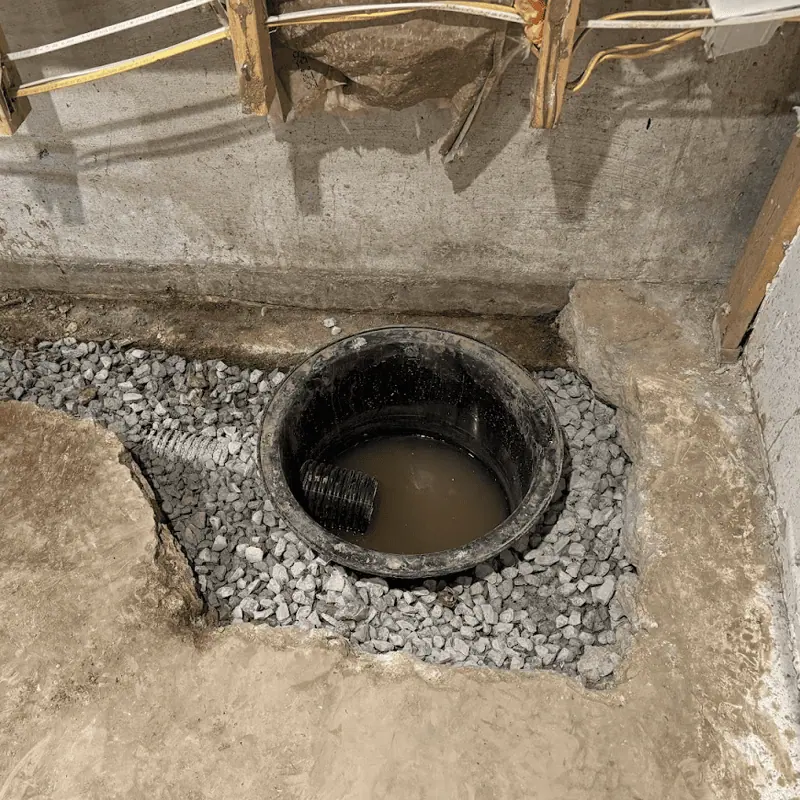
When Constant Running Is Actually Normal
Let’s start here because not every situation means something is wrong.
During a heavy Kansas City storm, your sump pump should be running frequently. That’s its job. When three inches of rain falls in two hours on clay soil that can’t absorb it, the drain tile system around your foundation is collecting a massive volume of water and sending it to the sump pit. The pump has to keep up. Hearing it cycle every few minutes during a heavy downpour is the sound of your system working.
Spring is another time when frequent cycling can be normal. The ground is thawing, the water table is rising, and spring storms are dumping rain on already-saturated soil. Your pump might run more often for weeks during this stretch. That’s seasonal, and it usually tapers off as the ground dries out in summer.
The concern is when the pump runs constantly and one of these isn’t the explanation.
Causes That Actually Mean Trouble
1) The Pump Is Undersized
If your sump pump doesn’t have enough horsepower for the volume of water your property produces, it’ll run nonstop trying to keep up and never quite get ahead. This is like trying to bail out a boat with a coffee cup. The pump empties the pit, the pit fills right back up, the pump kicks on again. The cycle never breaks.
We see this in homes where a builder installed the cheapest pump available or where a homeowner replaced a failed pump with whatever was on the shelf at the hardware store without calculating the actual water load. In KC’s clay soil, the water volume during storms can be significant. The pump needs to match it.
2) The Discharge Line Is Blocked or Too Short
Your sump pump moves water out of the pit, but where does it go? If the discharge line is clogged with debris, frozen (a big issue in KC winters), or dumps the water too close to the foundation, you’re pumping the same water in a circle. The pump pushes it out, it soaks back into the ground near the house, the drain tile collects it again, and it’s right back in the pit.
This is one of the most common problems we fix and one of the most overlooked. A discharge line that ends just a few feet from the house might as well not exist.
3) The Check Valve Is Missing or Failed
A check valve is a one-way valve on the discharge pipe that prevents water from flowing back into the pit after the pump shuts off. Without it, a portion of the water the pump just pushed up and out drains right back down into the pit. The float switch triggers, the pump kicks on again, pumps the same water up, and the cycle repeats. You’ll hear the pump running in very short, frequent bursts. It’s doing a lot of work and accomplishing nothing.
4) The Float Switch Is Stuck or Misadjusted
The float switch is what tells the pump when to turn on and off. It rises with the water level and triggers the pump. If it’s stuck in the “on” position, wedged against the side of the pit, or tangled with the pump cord, it’ll tell the pump to run even when the water level doesn’t warrant it. This is sometimes a simple fix, but if it’s happening repeatedly, the float switch setup might need to be reconfigured.
5) High Water Table
Some parts of the KC metro, especially areas near creeks, rivers, and low-lying neighborhoods, have naturally high water tables. If the water table sits at or near the level of your sump pit, the pit fills from groundwater pressure regardless of whether it’s raining. The pump runs constantly because there’s a constant supply of water.
This isn’t a malfunction. It’s an environmental condition. But it does mean you need a pump that’s rated for continuous duty and a discharge system that can handle the volume long-term without burning out.
6) Inadequate or Failing Drain Tile
The drain tile system around your foundation is what collects water and routes it to the sump pit in a controlled way. If that system is partially clogged, collapsed, or was never installed properly, water finds alternate paths to the pit, often bringing silt and debris with it. This can overload the pump with both water and sediment. If your perimeter drain tile is failing, no amount of pump upgrades will solve the underlying issue.
Why You Shouldn’t Ignore It
A sump pump that runs continuously is a pump that’s on borrowed time. Every pump has a finite lifespan measured in hours of operation. Running nonstop burns through that lifespan fast.
When the pump fails, and it will if it’s running 24/7, you lose your basement’s only defense against water. If it fails during a storm, you could have significant flooding before you even realize the pump is dead.
Beyond pump failure, constant running usually means something else in the system isn’t working right. The pump is compensating for another problem: bad discharge routing, failed drain tile, or inadequate exterior drainage. Fixing the pump without addressing the root cause is treating the symptom.
How We Fix It
We don’t just swap pumps and walk away. We figure out why the pump is running constantly and fix the actual cause.
That might mean upgrading to a properly sized sump pump that can handle your property’s water volume. It might mean installing or extending a discharge line so the water actually leaves the property instead of recycling back to the foundation. It might mean repairing or replacing old drain tile that’s sending more water (and dirt) to the pit than it should.
Often, it’s a combination. We look at the whole system, from the exterior drainage to the drain tile to the pump to the discharge, and address whatever isn’t doing its job.
We also install battery backup systems for homeowners who can’t afford to lose pump protection during a power outage. Kansas City storms knock out power regularly, and that’s exactly when your pump is working hardest.
Common Questions About Sump Pumps
How often should a sump pump run in normal conditions?
Outside of heavy rain and spring thaw, most sump pumps in the KC area should run occasionally, maybe a few times a day or less depending on your water table. If it’s cycling every few minutes on a dry day, something needs attention.
How long do sump pumps last?
A quality sump pump that runs under normal conditions typically lasts 7 to 10 years. A pump that runs constantly might burn out in 2 to 3 years or less. This is why fixing the root cause matters, it’s not just about your basement staying dry today. It’s about the system lasting.
Should I have a battery backup?
If your basement has anything of value in it, or if water in your basement would cause structural concerns, yes. Power outages during storms are common in KC. A battery backup keeps the pump running when the power goes out, which is the exact moment you need it most.
Can I fix the float switch myself?
You can check if it’s physically stuck or tangled with the cord. Unplug the pump first, then see if the float moves freely. If it’s stuck mechanically, freeing it might resolve the constant running temporarily. But if it keeps happening, the float switch or the pump itself likely needs to be replaced.
My pump is running but there’s still water in the basement. What’s happening?
Either the pump can’t keep up with the volume (undersized or failing), the water is entering through a path that doesn’t lead to the sump pit (like a wall crack above the drain tile level), or the discharge isn’t routing water far enough away. This is a situation where you should call sooner rather than later.
Let’s Figure Out Why Your Pump Won’t Stop
A sump pump running constantly is your system telling you something. It might be an easy fix like a stuck float switch or a short discharge line. It might be something bigger. Either way, the faster you figure it out, the less risk you’re carrying every time it rains.
We’ll come out, evaluate the pump, the pit, the drain tile, and the discharge, and tell you exactly what’s going on and what it’ll take to fix it.