

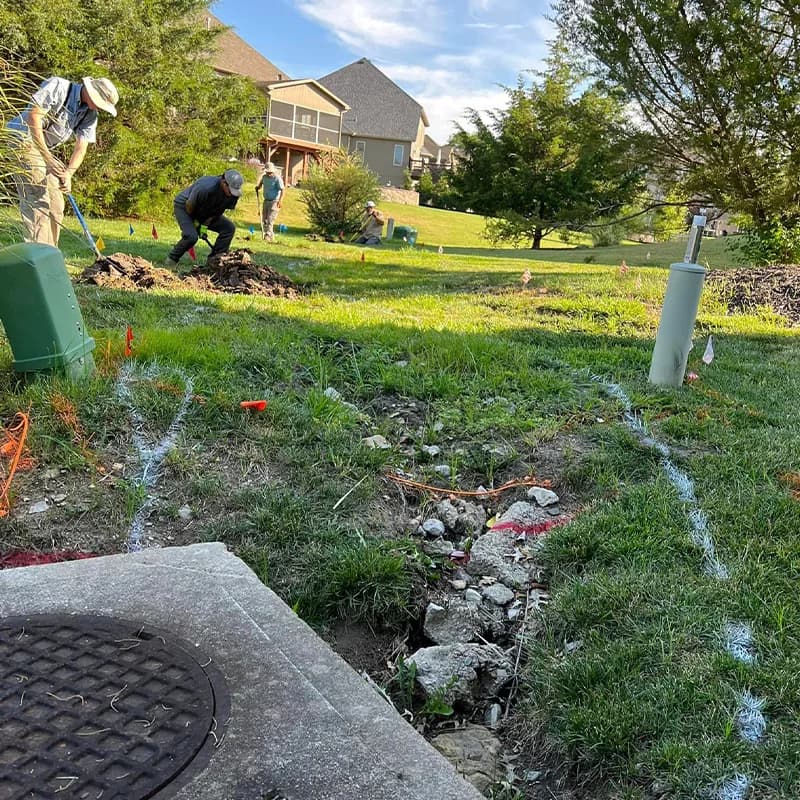
Erosion is water moving soil somewhere you did not want it to go: a washed-out strip down a slope, a gully forming along the fence, mulch and topsoil ending up on the driveway after every storm, a creek bank creeping toward the yard. Replacing the soil does not fix it. The water that moved it is still coming. We find where that water comes from and give it a safe path, then put the soil back.
How we stop erosion
| Problem | What we usually build |
|---|---|
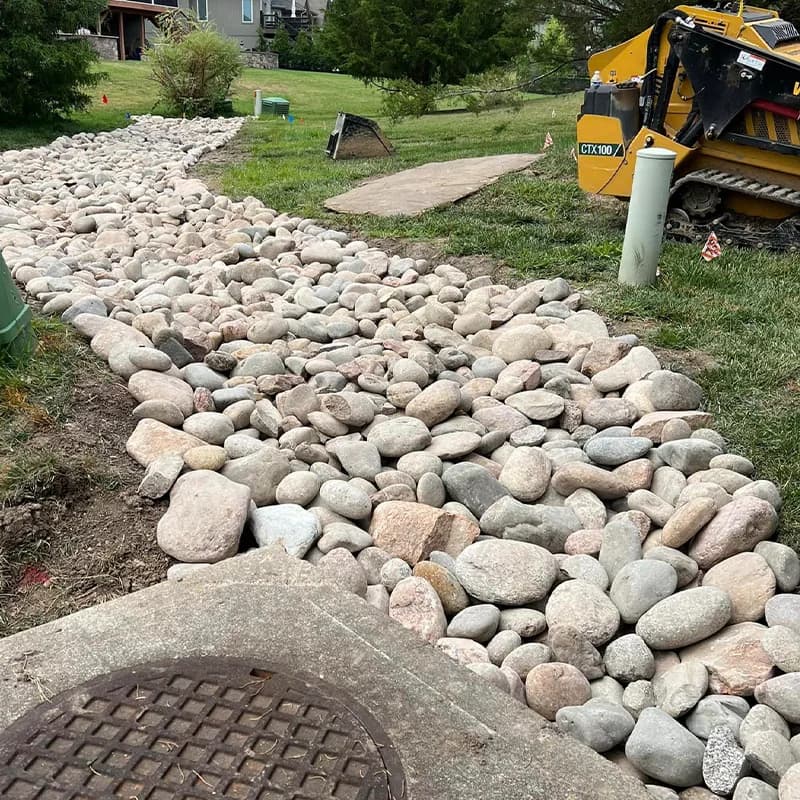
| Runoff cutting a channel across the yard | A swale to give it a shallow, grassed path, or a dry creek bed where the flow is too strong for grass. |
| Water washing down a slope toward the house | A berm or swale across the slope to turn it, and regrading so the ground sheds water away. |
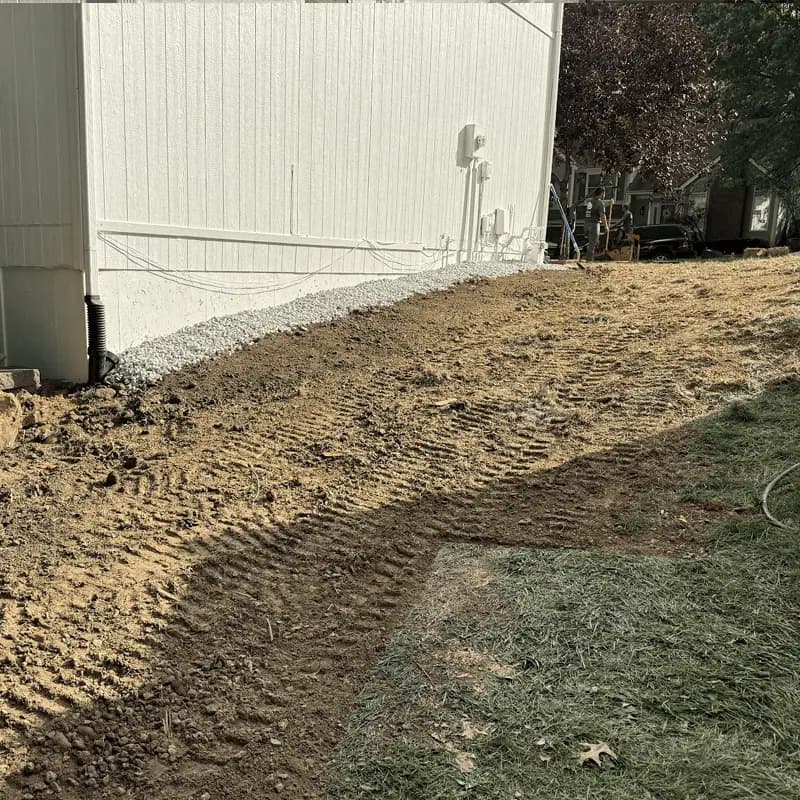
| Downspouts or a sump line scouring the ground | Buried downspouts or a sump drain extension that releases the water somewhere it cannot do damage. |
| A neighbor's runoff washing through your yard | A swale, berm or drain to catch it at the property line. See neighbor runoff. |
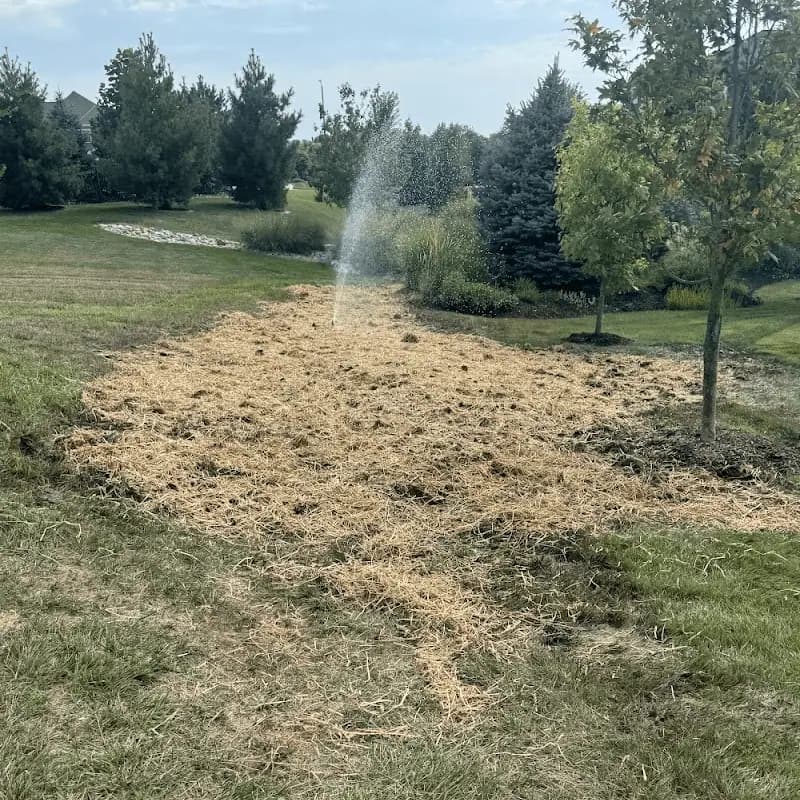
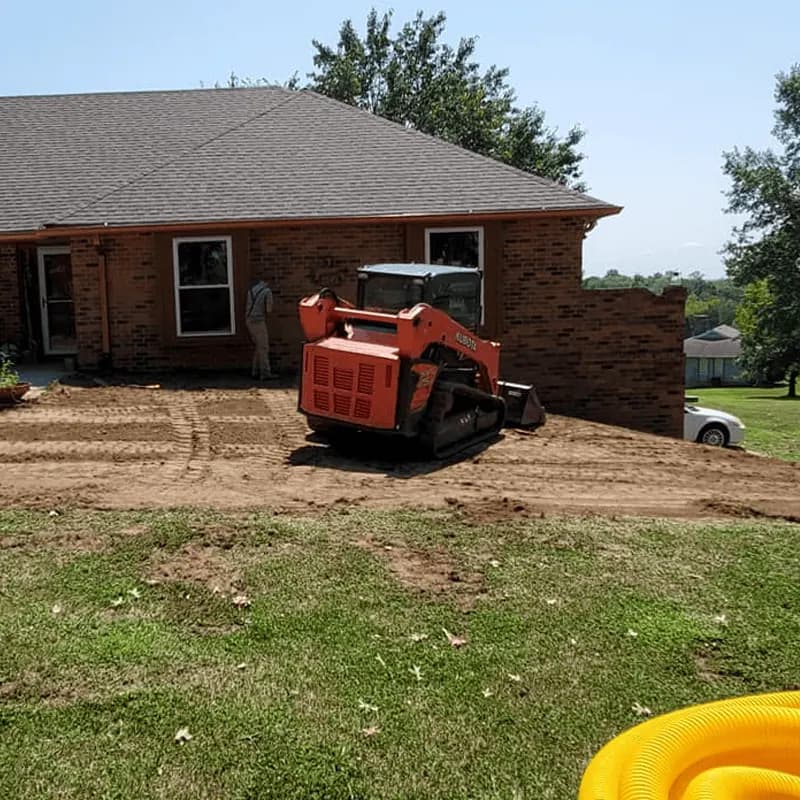
| Bare soil after construction or a drainage job | Seed, fertilizer and erosion blanket to hold it until the grass takes. |
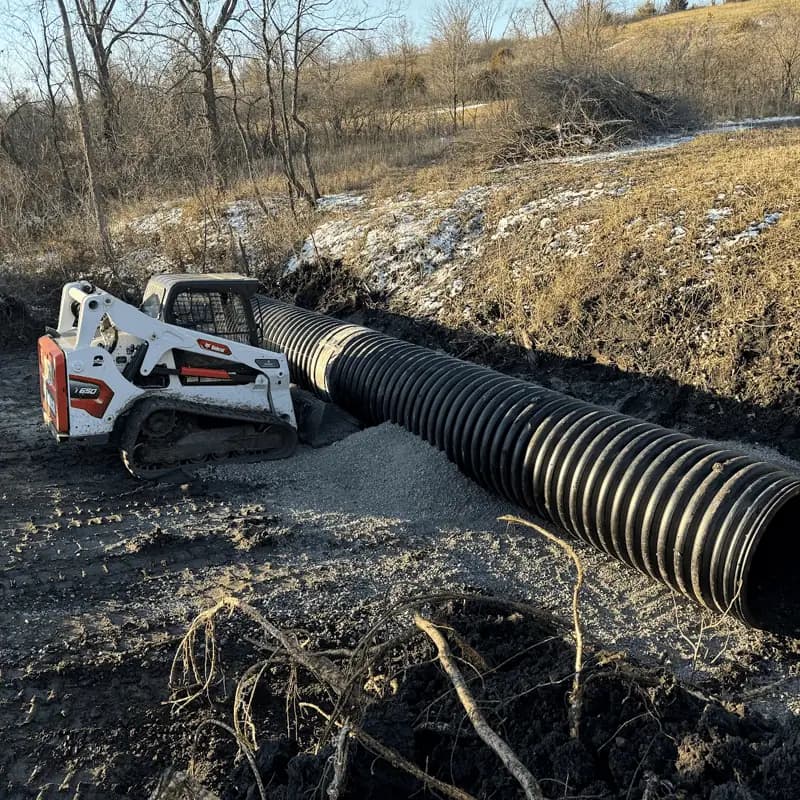
| A creek bank or drainage ditch eroding | Reshaping the bank and armoring it with rock, or a culvert crossing where you need to get across it. |
What our recent erosion work has cost
| Type of project | Price range |
|---|---|
| Swale grading and excavation | $900 to $3,720 |
| Seed, fertilizer and erosion blanket | $100 to $3,455 |
| Dry creek beds | $1,850 to $14,253 (most $3,000 to $9,500) |
| Creek bank erosion control | About $10,850 |
| Large valley regrading with dry creek bed | About $22,900 |
| Creek crossings | $7,845 to $18,675 |
Prices are the line-item totals from our own quotes and invoices, September 2025 to October 2026. Most erosion jobs combine two or three of these. Our project minimum is $5,000.
The pieces we use
Frequently Asked Questions
What causes erosion in a yard?
Concentrated water moving fast over bare or thin soil. In most yards we see, that water is being concentrated by something: downspouts or a sump line emptying onto a slope, a neighbor's runoff funneling through one spot, or a low channel that every storm follows. Find that and you have found the real problem.
Will grass alone stop erosion?
On a gentle slope with spread-out runoff, a healthy lawn is often enough. Where water is concentrated into a channel, grass gets washed out faster than it can establish. That is where a swale, a dry creek bed or a buried drain line has to carry the water first, and the grass comes after.
What is an erosion blanket?
A biodegradable mat of straw or fiber pinned over newly seeded soil. It holds seed and soil in place through the first heavy rains while the grass roots in, then breaks down. We use it on slopes and on any ground we disturb during a drainage job.
Can you fix erosion along a creek bank?
Often, yes. Creek bank work usually means reshaping the bank to a stable slope and armoring it with rock where the water hits hardest. It sometimes involves permits or easements, which we will flag during the estimate.
My neighbor's water is washing out my yard. What can I do?
You can fix your side: catch and redirect the water as it enters your property with a swale, berm or drain, and carry it somewhere it can leave safely. Our page on neighbor runoff walks through the options.
Do you have a minimum job size?
Yes, our project minimum is $5,000. Smaller pieces, like seeding and erosion blanket, are usually part of a larger drainage or grading job.
Stop losing your yard to the rain
We will walk the property with you, trace where the water comes from, and give you a firm written price. Book a free estimate or call (816) 826-8794.